Live briefing

Everything about Virtual Router Redundancy Protocol
Inter-router protocol that automatically assigns routers to hosts
The Virtual Router Redundancy Protocol (VRRP) is a network redundancy protocol standardized by the Internet Engineering Task Force (IETF). It provides high availability for the default gateway of an IP subnet by grouping multiple physical routers into a single virtual router that shares a common virtual IP address. The protocol is defined in the RFC 9568. Wikipedia →
🧭 Start here: a 6-step reading path
- Read the overview: Virtual Router Redundancy ProtocolA 5-minute orientation
- Skim a recent paper: Enhanced Virtual Router Redundancy Protocol for Optimized Network Performance and Security in Enterprise EnvironmentsInfluential work since 2022
- Pick up a classic book: Computer networkingThe most-reprinted book on the subject
- Read the landmark paper: Performance Evaluation of Bidirectional Forwarding Detection (BFD) over the Virtual Router Redundancy Protocol (VRRP)Cited 6 times
- Go sideways: Hot Standby Router ProtocolA closely related topic
- Go sideways: Common Address Redundancy ProtocolA closely related topic
📖 Definitions
No dictionary entry for this exact phrase.
🗂️ The subject at a glance
🏆 Landmark papers (most cited)
Performance Evaluation of Bidirectional Forwarding Detection (BFD) over the Virtual Router Redundancy Protocol (VRRP)
Implementing of Virtual Router Redundancy Protocol in a Private University
Optimasi Internet Gateway Menggunakan Virtual Router Redundancy Protocol
Penerapan Jaringan LAN Menggunakan Metode VRRP (Virtual Router Redundancy Protocol)
PENERAPAN METODE VIRTUAL ROUTER REDUNDANCY PROTOCOL (VRRP) PADA YAYASAN MASJID AL IKHLAS
Failover Gateway Menggunakan Protokol Virtual Router Redundancy Protocol (VRRP) pada Mikrotik Router
L2 Switch Feature for Virtual Router Redundancy Protocol Fast Convergence
Analisis Kualitas Layanan Virtual Router Redundancy Protocol Menggunakan Mikrotik pada Jaringan VLAN
🆕 Influential since 2022
📚 Books worth reading
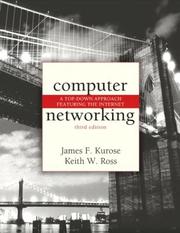 Computer networkingJames F. Kurose, Keith W. Ross · 1900
 Unix System Administration HandbookEvi Nemeth, Garth Snyder · 1989
 Data Communications and NetworkingBehrouz A. Forouzan, Catherine Ann Coombs · 2000
 VRRPAyikudy Srikanth, Adnan Adam Onart · 2002
 Broadband communicationsIFIP TC6 WG6.2 International Conference on Broadband Communications (4th 1998 Stuttgart, Germany) · 1998
Ranked by number of editions on Open Library, a rough measure of how lasting a book is.
🔗 Related topics
- Hot Standby Router Protocol In computer networking, the Hot Standby Router Protocol (HSRP) is a Cisco proprietary redundancy protocol for establishing a fault-tolerant default gateway…
- Common Address Redundancy Protocol The Common Address Redundancy Protocol or CARP is a computer networking protocol which allows multiple hosts on the same local area network to share a…
- Internet Protocol The Internet Protocol (IP) is the network layer communications protocol in the Internet protocol suite for relaying datagrams across network boundaries…
- First-hop redundancy protocol First hop redundancy protocols (FHRP) are a category of networking protocols designed to protect the default gateway used on a subnetwork by allowing two…
- Multiprotocol Label Switching Multiprotocol Label Switching (MPLS) is a routing technique in telecommunications networks that directs data from one node to the next based on labels…
- IPv6 Internet Protocol version 6 (IPv6) is the most recent version of the Internet Protocol (IP), the communications protocol that provides an identification…
- List of reserved IP addresses Below is a list of reserved Internet Protocol (IP) addresses. In the Internet addressing architecture, the Internet Engineering Task Force (IETF) and the…
- Open Shortest Path First Open Shortest Path First (OSPF) is a routing protocol for Internet Protocol (IP) networks. It uses a link state routing (LSR) algorithm and falls into…