Live briefing
Everything about Versatile Video Coding
Video compression standard
Versatile Video Coding (VVC), also known as H.266, ISO/IEC 23090-3, and MPEG-I Part 3, is a video compression standard finalized on 6 July 2020, by the Joint Video Experts Team (JVET) of the VCEG working group of ITU-T Study Group 16 and the MPEG working group of ISO/IEC JTC 1/SC 29. It is the successor to High Efficiency Video Coding. It was developed with two primary goals – improved compression performance and support for a very broad range of applications. Wikipedia →
🧭 Start here: a 6-step reading path
- Read the overview: Versatile Video CodingA 5-minute orientation
- Skim a recent paper: Overview of Versatile Video Coding (H.266/VVC) and Its Coding Performance AnalysisInfluential work since 2022
- Pick up a classic book: American FilmThe most-reprinted book on the subject
- Read the landmark paper: BORIS : a free, versatile open‐source event‐logging software for video/audio coding and live observationsCited 3,552 times
- Go sideways: List of open-source codecsA closely related topic
- Go sideways: List of codecsA closely related topic
📖 Definitions
No dictionary entry for this exact phrase.
🏆 Landmark papers (most cited)
BORIS : a free, versatile open‐source event‐logging software for video/audio coding and live observations
Developments in International Video Coding Standardization After AVC, With an Overview of Versatile Video Coding (VVC)
Fast Intra Mode Decision Algorithm for Versatile Video Coding
Quantization and Entropy Coding in the Versatile Video Coding (VVC) Standard
Motion Vector Coding and Block Merging in the Versatile Video Coding Standard
Versatile Video Coding Standard: A Review From Coding Tools to Consumers Deployment
Fast Affine Motion Estimation for Versatile Video Coding (VVC) Encoding
Object Segmentation-Assisted Inter Prediction for Versatile Video Coding
🆕 Influential since 2022
Overview of Versatile Video Coding (H.266/VVC) and Its Coding Performance Analysis
Low complexity inter coding scheme for Versatile Video Coding (VVC)
Optimum Quality Control Algorithm for Versatile Video Coding
Neural Network Based Rate Control for Versatile Video Coding
Using Four Hypothesis Probability Estimators for CABAC in Versatile Video Coding
📚 Books worth reading
 American FilmAmerican Film Institute · 1975
 Versatile Video CodingKamisetty Ramamohan Rao, Humberto Ochoa Dominguez · 2019
 Intelligent Technologies and Engineering SystemsJengnan Juang · 2013
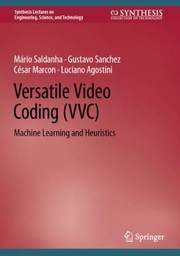 Versatile Video CodingMário Saldanha, Gustavo Sanchez · 2022
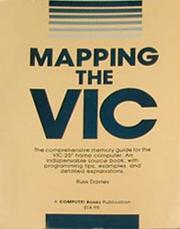 Mapping the VICRuss Davies · 1984
Ranked by number of editions on Open Library, a rough measure of how lasting a book is.
🔗 Related topics
- List of open-source codecs This is a listing of open-source codecs—that is, open-source software implementations of audio or video coding formats, audio codecs and video codecs respective…
- List of codecs The following is a list of compression formats and related codecs. Linear pulse-code modulation (LPCM, generally only described as PCM) is the format for…
- LCEVC Low Complexity Enhancement Video Coding (LCEVC) is a ISO/IEC video coding standard developed by the Moving Picture Experts Group (MPEG) under the project…
- Libavcodec Free and open-source software portal libavcodec is a free and open-source library of codecs for encoding and decoding video and audio data. libavcodec…
- Essential Video Coding MPEG-5 Essential Video Coding (EVC), standardized as ISO/IEC 23094-1, is a video compression standard that has been completed in April 2020 by decision…
- Video codec A video codec is software or hardware that compresses and decompresses digital video. In the context of video compression, codec is a portmanteau of encoder…
- High Efficiency Video Coding High Efficiency Video Coding (HEVC), also known as H.265 and MPEG-H Part 2, is a patent-encumbered video compression standard designed as part of the MPEG-H…
- Video Coding Experts Group The Video Coding Experts Group or Visual Coding Experts Group (VCEG, also known as Question 6) is a working group of the ITU Telecommunication Standardization…