Everything about Variables sampling plan
Acceptance Sampling Technique
In statistics, a variables sampling plan is an acceptance sampling technique. Plans for variables are intended for quality characteristics that are measured on a continuous scale. This plan requires the knowledge of the statistical model. The historical evolution of this technique dates back to the seminal work of W. Allen Wallis (1943). The purpose of a plan for variables is to assess whether the process is operating far enough from the specification limit. Plans for variables may produce a similar OC curve to attribute plans with significantly less sample size. Wikipedia →
🧭 Start here: a 6-step reading path
- Read the overview: Variables sampling planA 5-minute orientation
- Skim a recent paper: Stage-independent multiple sampling plan by variables inspection for lot determination based on the process capability index CpkInfluential work since 2022
- Pick up a classic book: Research DesignThe most-reprinted book on the subject
- Read the landmark paper: A variables sampling plan based on Cpmk for product acceptance determinationCited 115 times
- Go sideways: Truncated normal distributionA closely related topic
- Go sideways: Experimental uncertainty analysisA closely related topic
📖 Definitions
No dictionary entry for this exact phrase.
🗂️ The subject at a glance
No outline available.
🏆 Landmark papers (most cited)
A variables sampling plan based on Cpmk for product acceptance determination
Designing of Variables Repetitive Group Sampling Plan Involving Minimum Average Sample Number
Design and Construction of a Variables Repetitive Group Sampling Plan for Unilateral Specification Limit
Developing a sampling plan by variables inspection for controlling lot fraction of defectives
A modified variables repetitive group sampling plan with the consideration of preceding lots information
Chain sampling plan for variables inspection
A variables repetitive group sampling plan under failure-censored reliability tests for Weibull distribution
Design and construction of a variables multiple dependent state sampling plan based on process yield
🆕 Influential since 2022
Stage-independent multiple sampling plan by variables inspection for lot determination based on the process capability index Cpk
Optimal design of a two-point variables skip-lot sampling plan with Taguchi capability index
Designing a variables two-plan sampling system with adjustable acceptance criteria for lot disposition
Designing of variables repetitive group sampling plan for consumer protection
Developing variables two-plan sampling scheme with consideration of process loss for lot sentencing
📚 Books worth reading
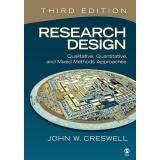 Research DesignJohn W. Creswell, J. David Creswell · 1994
 Introduction to operations researchFrederick S. Hillier · 1967
 Operations ManagementRoberta S. Russell, Bernard Taylor · 1998
 The personal MBAJosh Kaufman · 2010
 Introduction to research in the health sciencesStephen Polgar · 1988
 Simulation modeling using @RiskWayne L. Winston · 1996
- 📕Clinical trials handbookCurtis L. Meinert · 2012
 Qualitative Data AnalysisMatthew B. Miles, A. Michael Huberman · 2013
Ranked by number of editions on Open Library, a rough measure of how lasting a book is.
🔗 Related topics
- Truncated normal distribution In probability and statistics, the truncated normal distribution is the probability distribution derived from that of a normally distributed random variable…
- Experimental uncertainty analysis Experimental uncertainty analysis is a technique that analyses a derived quantity, based on the uncertainties in the experimentally measured quantities…
- Alpha beta filter An alpha beta filter (also called alpha-beta filter, f-g filter or g-h filter) is a simplified form of observer for estimation, data smoothing and control…
- Unit Weibull distribution The unit-Weibull distribution (UW) is a continuous probability distribution with domain on ( 0 , 1 ) {\displaystyle (0,1)} . Useful for indices and rates…
- Normal basis In mathematics, specifically the algebraic theory of fields, a normal basis is a special kind of basis for Galois extensions of finite degree, characterised…
- Expected shortfall Expected shortfall (ES) is a risk measure—a concept used in the field of financial risk measurement to evaluate the market risk or credit risk of a portfolio…
- Gumbel distribution In probability theory and statistics, the Gumbel distribution (also known as the type-I generalized extreme value distribution) is used to model the distributio…
- Gibbons–Hawking–York boundary term In general relativity and quantum gravity, the Gibbons–Hawking–York boundary term is a term that needs to be added to the Einstein–Hilbert action when…