Everything about Utility computing
Service provisioning model
Utility computing, or computer utility, is a service provisioning model in which a service provider makes computing resources and infrastructure management available to the customer as needed, and charges them for specific usage rather than a flat rate. Like other types of on-demand computing, the utility model seeks to maximize the efficient use of resources and/or minimize associated costs. Utility is the packaging of system resources, such as computation, storage and services, as a metered service. This model has the advantage of a low or no initial cost to acquire computer resources; instead, resources are essentially rented. Wikipedia →
🧭 Start here: a 6-step reading path
- Read the overview: Utility computingA 5-minute orientation
- Skim a recent paper: Fast and converged classical simulations of evidence for the utility of quantum computing before fault toleranceInfluential work since 2022
- Pick up a classic book: Learning PerlThe most-reprinted book on the subject
- Read the landmark paper: Cloud computing and emerging IT platforms: Vision, hype, and reality for delivering computing as the 5th utilityCited 4,151 times
- Go sideways: Dynamic infrastructureA closely related topic
- Go sideways: Cloud computingA closely related topic
📖 Definitions
Noun A form of computing in which the computer resources are consumed like a traditional utility (water, electricity, gas).
🗂️ The subject at a glance
🏆 Landmark papers (most cited)
Cloud computing and emerging IT platforms: Vision, hype, and reality for delivering computing as the 5th utility
Evidence for the utility of quantum computing before fault tolerance
The utility business model and the future of computing services
Adaptive control of virtualized resources in utility computing environments
Utility computing SLA management based upon business objectives
Utility aware offloading for mobile-edge computing
Autonomic metered pricing for a utility computing service
Computing PROPr Utility Scores for PROMIS® Profile Instruments
🆕 Influential since 2022
Fast and converged classical simulations of evidence for the utility of quantum computing before fault tolerance
Online Optimal Service Selection, Resource Allocation and Task Offloading for Multi-Access Edge Computing: A Utility-Based Approach
Utility-Aware UAV Deployment and Task Offloading in Multi-UAV Edge Computing Networks
Utility Maximization for IRS Assisted Wireless Powered Mobile Edge Computing and Caching (WP-MECC) Networks
Mobility-Aware Utility Maximization in Digital Twin-Enabled Serverless Edge Computing
📚 Books worth reading
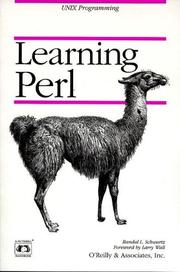 Learning PerlRandal L. Schwartz, Tom Phoenix · 1993
 Unix System V/386 Release 4AT & T Bell Laboratories. Technical Publication Dept. · 1990
 IEEE standard for information technologyInstitute of Electrical and Electronics Engineers · 1991
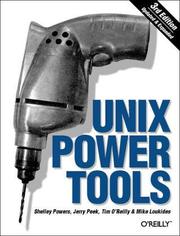 UNIX Power ToolsJerry Peek, Tim O'Reilly · 1993
 lex & yaccDoug Brown Doug, John R. Levine · 1990
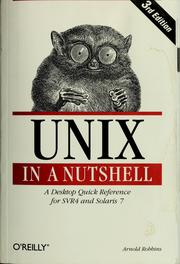 UNIX in a NutshellArnold Robbins · 1999
 sed & awkDale Dougherty, Arnold Robbins · 1990
 The AWK programming languageAlfred V. Aho, Brian W. Kernighan · 1988
Ranked by number of editions on Open Library, a rough measure of how lasting a book is.
🔗 Related topics
- Dynamic infrastructure Dynamic Infrastructure is an information technology concept related to the design of data centers, whereby the underlying hardware and software can respond…
- Cloud computing Cloud computing is defined by the International Organization for Standardization (ISO) as "a paradigm for enabling network access to a scalable and elastic…
- Thin client In computer networking, a thin client (sometimes called a slim client or lean client) is a simple, low-performance computer that has been optimized for…
- HP Cloud HP Cloud was a set of cloud computing services available from Hewlett-Packard. It was the combination of the previous HP Converged Cloud business unit…
- Grid computing Grid computing is the use of widely distributed computer resources to reach a common goal. A computing grid can be thought of as a distributed system with…
- HP CloudSystem HP CloudSystem is a cloud infrastructure from Hewlett Packard Enterprise (HPE) that combines storage, servers, networking and software. HP CloudSystem…
- Internet area network An Internet area network (IAN) is a concept for a communications network that connects voice and data endpoints within a cloud environment over IP, replacing…
- HP Cloud Service Automation Software HP Cloud Service Automation (HP CSA) is cloud management software from Hewlett Packard Enterprise (HPE) that is used by companies and government agencies…