Live briefing
Everything about User-defined function
Function provided by the user of a program or environment
A user-defined function (UDF) is a function provided by the user of a program or environment, in a context where the usual assumption is that functions are built into the program or environment. UDFs are usually written for the requirement of its creator. Wikipedia →
🧭 Start here: a 6-step reading path
- Read the overview: User-defined functionA 5-minute orientation
- Skim a recent paper: Efficient Execution of User-Defined Functions in SQL QueriesInfluential work since 2022
- Pick up a classic book: C++ ProgrammingThe most-reprinted book on the subject
- Read the landmark paper: Optimization of Complex Dataflows with User-Defined FunctionsCited 28 times
- Go sideways: Stored procedureA closely related topic
- Go sideways: PL/SQLA closely related topic
📖 Definitions
Noun A program or subroutine, provided by the user rather than being built into the system, that may return a value and may take input parameters.
🗂️ The subject at a glance
🏆 Landmark papers (most cited)
Optimization of Complex Dataflows with User-Defined Functions
Implementation of micropolar fluids model and hydrodynamic behavior analysis using user-defined function in FLUENT
Consolidation of queries with user-defined functions
Stigmatic singlet with a user-defined apodization pupil function
Data-Driven AI Models within a User-Defined Optimization Objective Function in Cement Production
An Approximate Calculation Model for Electromagnetic Devices Based on a User-Defined Interpolating Function
Encrypting Database Content with User-Defined Function
Design and implementation of O-PAS user-defined function blocks
🆕 Influential since 2022
Efficient Execution of User-Defined Functions in SQL Queries
Soft querying powered by user-defined functions in J-CO-QL
Application of SAMMY User-Defined Resolution Function at Spallation Neutron Sources
PUDSQ: Privacy-Preserving User-Defined Skyline Query Processing With Function Secret Sharing
Sharing Queries with Nonequivalent User-defined Aggregate Functions
📚 Books worth reading
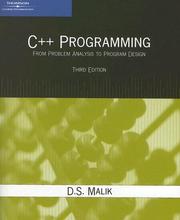 C++ ProgrammingD. S. Malik · 2004
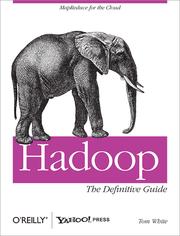 HadoopTom White, Tom White · 2009
 Programming and problem solving with C++Nell B. Dale, Chip Weems · 1996
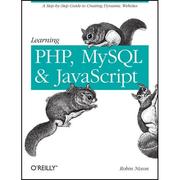 Learning PHP, MySQL & JavaScriptRobin Nixon · 2009
 PHP for the World Wide WebLarry Ullman · 2001
 Introduction to Computing Using PythonLjubomir Perkovic · 2011
 SQL bibleAlex Kriegel, Boris M. Trukhnov · 2007
 Let Us C++Yashavant Kanetkar · 2002
Ranked by number of editions on Open Library, a rough measure of how lasting a book is.
🔗 Related topics
- Stored procedure A stored procedure (also termed prc, proc, storp, sproc, StoPro, StoredProc, StoreProc, sp, or SP) is a subroutine available to applications that access…
- PL/SQL PL/SQL (Procedural Language for SQL) is Oracle Corporation's procedural extension for SQL and the Oracle relational database. PL/SQL is available in Oracle…
- Apache Hive Apache Hive is a data warehouse software project. It is built on top of Apache Hadoop for providing data query and analysis. Hive gives an SQL-like interface…
- SQL/JRT SQL/JRT, or SQL Routines and Types for the Java Programming Language, is an extension to the SQL standard first published as ISO/IEC 9075-13:2002 (part…
- Comparison of OLAP servers The following tables compare general and technical information for a number of online analytical processing (OLAP) servers. Please see the individual products…
- Comparison of relational database management systems The following tables compare general and technical information for a number of relational database management systems. Please see the individual products'…
- Null (SQL) In the SQL database query language, null or NULL is a special marker used to indicate that a data value does not exist in the database. Introduced by the…
- Database trigger A database trigger is procedural code that is automatically executed in response to specific events on a table or view in a database. Triggers are commonly…