Everything about Typhoon
Regional tropical cyclone

A typhoon is a tropical cyclone which produces sustained hurricane-force winds of at least 119 km/h (74 mph). This region is referred to as the Northwestern Pacific Basin, accounting for almost one third of the world's tropical cyclones. For organizational purposes, the northern Pacific Ocean is divided into three regions: the eastern, central, and western. The Regional Specialized Meteorological Center (RSMC) for tropical cyclone forecasts is in Japan, with other tropical cyclone warning centres for the northwest Pacific in Hawaii, the Philippines, and Hong Kong. Although the RSMC names each system, the main name list itself is coordinated among 18 countries that have territories threatened by typhoons each year. Wikipedia →
🧭 Start here: a 6-step reading path
- Read the overview: TyphoonA 5-minute orientation
- Skim a recent paper: Resilience Assessment and Improvement for Cyber-Physical Power Systems Under Typhoon DisastersInfluential work since 2022
- Pick up a classic book: TyphoonThe most-reprinted book on the subject
- Read the landmark paper: Growing typhoon influence on east AsiaCited 300 times
- Go sideways: List of very strong typhoonsA closely related topic
- Go sideways: Typhoon HaimaA closely related topic
📖 Definitions
Noun A severe tropical cyclone; an intense, rotating storm.
Noun A weather phenomenon in the northwestern Pacific that is precisely equivalent to a hurricane except for its geographical region, typically resulting in wind speeds of 64 knots (119 km/h) or above. Equivalent to a cyclone in the Indian Ocean and Indonesia and Australia.
Verb To swirl like a hurricane.
🗂️ The subject at a glance
🏆 Landmark papers (most cited)
Growing typhoon influence on east Asia
Cluster Analysis of Typhoon Tracks. Part II: Large-Scale Circulation and ENSO
Cluster Analysis of Typhoon Tracks. Part I: General Properties
Communicating on Twitter during a disaster: An analysis of tweets during Typhoon Haiyan in the Philippines
Sedimentary differences between the 1993 Hokkaido-nansei-oki tsunami and the 1959 Miyakojima typhoon at Taisei, southwestern Hokkaido, northern Japan
Examining the ENSO-typhoon hypothesis
Northwestern Pacific typhoon intensity controlled by changes in ocean temperatures
Catastrophic landslide induced by Typhoon Morakot, Shiaolin, Taiwan
🆕 Influential since 2022
Resilience Assessment and Improvement for Cyber-Physical Power Systems Under Typhoon Disasters
A novel offshore wind farm typhoon wind speed prediction model based on PSO–Bi-LSTM improved by VMD
Resilience enhancement of distribution network under typhoon disaster based on two-stage stochastic programming
Extreme structural response prediction and fatigue damage evaluation for large-scale monopile offshore wind turbines subject to typhoon conditions
Modelling and forecasting of SHM strain measurement for a large-scale suspension bridge during typhoon events using variational heteroscedastic Gaussian process
📚 Books worth reading
 TyphoonJoseph Conrad · 1902
 PandemicsWorld Book, Inc · 2009
 The Magic School BusJoanna Cole · 1995
 The track of the "typhoon"William Washburn Nutting · 1921
 Last quadrantMeira Chand · 1981
 TYPHOONEdward Packard · 1995
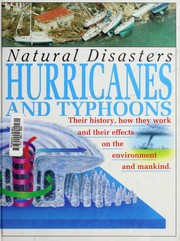 Hurricanes and Typhoons (Natural Disasters)Jacqueline Dineen · 1991
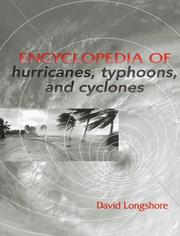 Encyclopedia of hurricanes, typhoons, and cyclonesDavid Longshore · 1998
Ranked by number of editions on Open Library, a rough measure of how lasting a book is.
🔗 Related topics
- List of very strong typhoons A very strong typhoon is the second highest category used by the Japan Meteorological Agency (JMA) to classify tropical cyclones that has reached typhoon…
- Typhoon Haima Typhoon Haima, known in the Philippines as Super Typhoon Lawin, was the third most intense tropical cyclone worldwide in 2016, tying with Nepartak. It…
- Typhoon Hato Typhoon Hato, known in the Philippines as Severe Tropical Storm Isang, was a powerful tropical cyclone that struck South China in late August 2017. The…
- Typhoon Lynn Typhoon Lynn, more commonly known in the Philippines as Super Typhoon Pepang, was a typhoon that was responsible for the worst flooding in Taiwan in 40 years…
- Typhoon Nesat (2017) Typhoon Nesat, known in the Philippines as Typhoon Gorio, was a strong tropical cyclone that impacted Taiwan and Fujian, China in late July 2017. It was…
- Tropical cyclone warnings and watches Tropical cyclone warnings and watches are alerts issued by national weather forecasting bodies to coastal areas threatened by the imminent approach of…
- Typhoon Usagi (2013) Typhoon Usagi, known in the Philippines as Typhoon Odette, was a tropical cyclone which affected Taiwan, the Philippines, China, and Hong Kong in mid September…
- Typhoon Trami Typhoon Trami, known in the Philippines as Typhoon Paeng, was the second typhoon to affect Japan within a month. The twenty-fourth tropical storm and tenth…