Live briefing
Everything about Type class
Type system in computer science
In computer science, a type class is a type system construct that supports ad hoc polymorphism in a programming language. This is achieved by adding constraints to type variables in parametrically polymorphic types. Such a constraint typically involves a type class T and a type variable a, and means that a can only be instantiated to a type whose members support the overloaded operations associated with T. Wikipedia →
🧭 Start here: a 6-step reading path
- Read the overview: Type classA 5-minute orientation
- Skim a recent paper: A Class of Variational–Hemivariational Inequalities for Bingham Type FluidsInfluential work since 2022
- Pick up a classic book: Pride and PrejudiceThe most-reprinted book on the subject
- Read the landmark paper: Hydrotalcite-type anionic clays: Preparation, properties and applications.Cited 5,578 times
- Go sideways: Type familyA closely related topic
- Go sideways: Generic programmingA closely related topic
📖 Definitions
Noun A type system construct that supports ad hoc polymorphism (independent of the type hierarchy), first pioneered in Haskell.
🏆 Landmark papers (most cited)
Hydrotalcite-type anionic clays: Preparation, properties and applications.
Mineralogical Variations within the S-Type Asteroid Class
A class of logistic-type discriminant functions
A class of curvature type equation
Type II General Exponential Class of Distributions
Type I General Exponential Class of distributions
Social class and type of schizophrenia
On a class of Kirchhoff type problems
🆕 Influential since 2022
📚 Books worth reading
 Pride and PrejudiceJane Austen · 1813
 Sense and SensibilityJane Austen · 1811
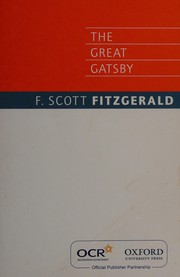 The Great GatsbyF. Scott Fitzgerald · 1920
 The Man Who Knew Too MuchGilbert Keith Chesterton · 1922
 The Age of InnocenceEdith Wharton · 1920
 Alice AdamsBooth Tarkington · 1921
 The Kite RunnerKhaled Hosseini · 2003
 Towards ZeroAgatha Christie · 1944
Ranked by number of editions on Open Library, a rough measure of how lasting a book is.
🔗 Related topics
- Type family In computer science, a type family associates data types with other data types, using a type-level function defined by an open-ended collection of valid…
- Generic programming Generic programming is a style of computer programming in which algorithms are written in terms of data types to-be-specified-later that are then instantiated…
- Generalized algebraic data type In functional programming, a generalized algebraic data type (GADT, also first-class phantom type, guarded recursive datatype, or equality-qualified type)…
- Kind (type theory) In the area of mathematical logic and computer science known as type theory, a kind is the type of a type constructor or, less commonly, the type of a…
- Glasgow Haskell Compiler The Glasgow Haskell Compiler (GHC) is a native or machine code compiler for the functional programming language Haskell. It provides a cross-platform software…
- Parametric polymorphism In programming languages and type theory, parametric polymorphism allows a single piece of code to be given a "generic" type, using variables in place…
- Haskell features This article describes the features in the programming language Haskell. A simple example that is often used to demonstrate the syntax of functional languages…
- Monad (functional programming) In functional programming, monads are a way to structure computations as a sequence of steps, where each step produces a value, plus some extra information…