Live briefing
Everything about Pattern matching
Functional programming construct
In computer science, pattern matching is the act of checking a given sequence of tokens for the presence of the constituents of some pattern. In contrast to pattern recognition, the match usually must be exact: "either it will or will not be a match." The patterns generally have the form of either sequences or tree structures. Uses of pattern matching include outputting the locations of a pattern within a token sequence, to output some component of the matched pattern, and to substitute the matching pattern with some other token sequence. Wikipedia →
🧭 Start here: a 6-step reading path
- Read the overview: Pattern matchingA 5-minute orientation
- Pick up a classic book: Introduction to Computing Using PythonThe most-reprinted book on the subject
- Read the landmark paper: A pattern-matching algorithm for two-dimensional coordinate listsCited 121 times
- Go sideways: Algebraic data typeA closely related topic
- Go sideways: Haskell featuresA closely related topic
📖 Definitions
No dictionary entry for this exact phrase.
🗂️ The subject at a glance
🏆 Landmark papers (most cited)
A pattern-matching algorithm for two-dimensional coordinate lists
Two dimensional pattern matching
Smart Templates for peak pattern matching with comprehensive two-dimensional liquid chromatography
An Alphabet Independent Approach to Two-Dimensional Pattern Matching
New algorithmic approaches to protein spot detection and pattern matching in two-dimensional electrophoresis gel databases
A technique for two-dimensional pattern matching
Point pattern matching in the analysis of two-dimensional gel electropherograms
On the Complexity of Pattern Matching for Highly Compressed Two-Dimensional Texts
📚 Books worth reading
 Introduction to Computing Using PythonLjubomir Perkovic · 2011
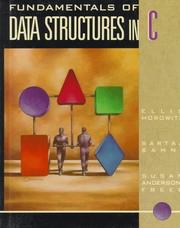 Fundamentals of data structures in CEllis Horowitz · 1993
 The new stereo soundbookF. Alton Everest · 1992
 2-D page map analysisEmilio Marengo, Elisa Robotti · 2016
 Statistical Models for Data AnalysisPaolo Giudici · 2013
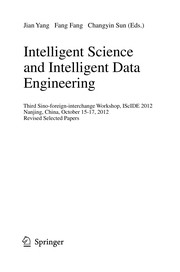 Intelligent Science and Intelligent Data EngineeringJian Yang · 2013
 Data Structures and Algorithms in JavaMichael T. Goodrich, Roberto Tamassia · 2014
 প্রোগ্রামিং কনটেস্টমোঃ মাহবুবুল হাসান · 2016
Ranked by number of editions on Open Library, a rough measure of how lasting a book is.
🔗 Related topics
- Algebraic data type In computer programming, especially in functional programming and type theory, an algebraic data type (ADT) is a composite data type, i.e. a type formed…
- Haskell features This article describes the features in the programming language Haskell. A simple example that is often used to demonstrate the syntax of functional languages…
- Conditional (computer programming) In computer programming, a conditional statement directs program control flow based on the value of a condition; a Boolean expression. A conditional expression…
- Racket features Racket has been under active development as a vehicle for programming language research since the mid-1990s, and has accumulated many features over the…
- Lazy evaluation In programming language theory, lazy evaluation, or call-by-need, is an evaluation strategy which delays the evaluation of an expression until its value…
- Erlang (programming language) Erlang (/ˈɜːrlæŋ/ UR-lang) is a general-purpose, concurrent, functional high-level programming language, and a garbage-collected runtime system. The term…
- Tagged union In computer science, a tagged union, also called a variant, variant record, choice type, discriminated union, disjoint union, sum type, or coproduct, is…
- F Sharp (programming language) F# (pronounced F sharp) is a general-purpose, high-level, strongly typed, functional-first programming language that encompasses functional, imperative…