Everything about Turing test
Test of a machine's ability to imitate human intelligence

The Turing test was designed by Alan Turing to assess a machine's ability to exhibit intelligent behaviour equivalent to that of a human by imitating interactive dialogue. In the modern version, a human evaluator judges a text transcript of a natural-language conversation between a human and a machine. The evaluator tries to identify the machine, and the machine passes if the evaluator cannot reliably tell them apart. The results would not depend on the machine's ability to answer questions correctly, only on how closely its answers resembled those of a human. Since the Turing test is a test of indistinguishability in performance capacity, the original (verbal) version generalises naturally to all of human performance capacity, including nonverbal (robotic). Wikipedia →
🧭 Start here: a 6-step reading path
- Read the overview: Turing testA 5-minute orientation
- Skim a recent paper: A Turing test of whether AI chatbots are behaviorally similar to humansInfluential work since 2022
- Pick up a classic book: The assumption of agency theoryThe most-reprinted book on the subject
- Read the landmark paper: Turing Test: 50 Years LaterCited 272 times
- Go sideways: Computing Machinery and IntelligenceA closely related topic
- Go sideways: Artificial stupidityA closely related topic
📖 Definitions
No dictionary entry for this exact phrase.
🏆 Landmark papers (most cited)
Turing Test: 50 Years Later
The Turing Test*
The Turing Triage Test
Beyond the Turing Test
The Truly Total Turing Test*
Beyond the Turing Test
PessimalPrint: a reverse Turing test
Moving beyond the Turing test
🆕 Influential since 2022
A Turing test of whether AI chatbots are behaviorally similar to humans
Putting ChatGPT’s Medical Advice to the (Turing) Test: Survey Study
Large Language Models and the Reverse Turing Test
Virtual Cell Challenge: Toward a Turing test for the virtual cell
Attributions toward artificial agents in a modified Moral Turing Test
📚 Books worth reading
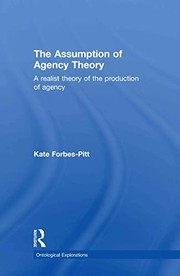 The assumption of agency theoryKate Forbes-Pitt · 2011
 The Most Human HumanBrian Christian · 2011
 Turing's LegacyRod Downey · 2014
 What Is Essential to Being Human?Margaret Scotford Archer, Andrea M. Maccarini · 2021
 Common Sense, the Turing Test, and the Quest for Real AIHector J. Levesque · 2017
 The Turing TestStuart Shieber · 2004
 Turing's Imitation GameKevin Warwick, Huma Shah · 2016
 The Turing testJames H. Moor · 2003
Ranked by number of editions on Open Library, a rough measure of how lasting a book is.
🔗 Related topics
- Computing Machinery and Intelligence "Computing Machinery and Intelligence" is a paper written by Alan Turing on the topic of artificial intelligence. The paper, published in 1950 in Mind…
- Artificial stupidity Artificial stupidity is a term used within the field of computer science to refer to a technique of "dumbing down" computer programs in order to deliberately…
- Loebner Prize The Loebner Prize was an annual competition in artificial intelligence that awarded prizes to the computer programs considered by the judges to be the…
- Minimum intelligent signal test The minimum intelligent signal test, or MIST, is a variation of the Turing test proposed by Chris McKinstry in which only boolean (yes/no or true/false)…
- Computer game bot Turing test The computer game bot Turing test is a variant of the Turing test, where a human judge viewing and interacting with a virtual world must distinguish between…
- Philosophy of artificial intelligence The philosophy of artificial intelligence is a branch of the philosophy of mind and the philosophy of computer science that explores artificial intelligence…
- Artificial general intelligence Artificial general intelligence (AGI) is a hypothetical type of artificial intelligence that matches or surpasses human capabilities across most or all…
- Eugene Goostman Eugene Goostman is a chatbot that some regard as having passed the Turing test, a test of a computer's ability to communicate indistinguishably from a…