Live briefing
Everything about Truth value
Value indicating the relation of a proposition to truth
In logic and mathematics, a truth value, sometimes called a logical value, is a value indicating the relation of a proposition to truth, which in classical logic has only two possible values. Truth values are used in computing as well as various types of logic. Wikipedia →
🧭 Start here: a 6-step reading path
- Read the overview: Truth valueA 5-minute orientation
- Skim a recent paper: The ‘Post-truth’ Crisis, the Value of Truth, and the Substantivist-Deflationist DebateInfluential work since 2022
- Pick up a classic book: A children's book about cheatingThe most-reprinted book on the subject
- Read the landmark paper: The Value of TruthCited 45 times
- Go sideways: NegationA closely related topic
- Go sideways: Principle of bivalenceA closely related topic
📖 Definitions
Noun A value indicating to what extent a statement is true; in classical logic, these are the values "true" and "false".
🗂️ The subject at a glance
🏆 Landmark papers (most cited)
The Value of Truth
Minimalism and the Value of Truth
Truth, Value and Epistemic Expressivism
Descriptions, truth value intuitions, and questions
Truth and epistemic value
Fregean Connection: Bedeutung, Value and Truth-Value
Declaring the Value of Truth
The value of minimalist truth
🆕 Influential since 2022
The ‘Post-truth’ Crisis, the Value of Truth, and the Substantivist-Deflationist Debate
Fuzzy Reasoning Based on Truth-Value Progression: A Control-Theoretic Design Approach
Epistemic Rationality and the Value of Truth
Making Sense of Truth as a Value
Truth-Telling in a Sender–Receiver Game: Social Value Orientation and Incentives
📚 Books worth reading
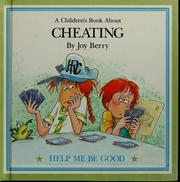 A children's book about cheatingJoy Berry · 1982
 A children's book about lyingJoy Berry · 1982
 Return to philosophyJoad, C. E. M. · 1935
- 📕Learning and thinkingCharles Vereker · 1967
 Lies that BindSusan D. Blum · 2006
 Human values and veritiesHenry Osborn Taylor · 1928
 I Didn't Do It!Sue Graves, Desideria Guicciardini · 2013
 Plato and ProtagorasOded Balaban · 1999
Ranked by number of editions on Open Library, a rough measure of how lasting a book is.
🔗 Related topics
- Negation In logic, negation, also called the logical not or logical complement, is an operation that takes a proposition P to another proposition "not P", written…
- Principle of bivalence In logic, the semantic principle (or law) of bivalence states that every declarative sentence expressing a proposition (of a theory under inspection) has…
- Logical connective In logic, a logical connective (also called a logical operator, sentential connective, or sentential operator) is an operator that combines or modifies…
- Intuitionistic logic Intuitionistic logic, sometimes more generally called constructive logic, refers to systems of symbolic logic that differ from the systems used for classical…
- Heyting algebra In mathematics, a Heyting algebra (also known as pseudo-Boolean algebra) is a bounded lattice (with join and meet operations written ∨ and ∧ and with least…
- Material conditional The material conditional (also known as material implication) is a binary operation commonly used in logic. When the conditional symbol → {\displaystyle…
- Outline of logic Logic is the formal science of using reason and is considered a branch of both philosophy and mathematics and to a lesser extent computer science. Logic…
- Three-valued logic A three-valued logic (also trinary logic, trivalent, ternary, or trilean, sometimes abbreviated 3VL) is any of several many-valued logic systems in which…