Live briefing
Everything about Tree contraction
Technique in parallel algorithms
In computer science, parallel tree contraction is a broadly applicable technique for the parallel solution of a large number of tree problems, and is used as an algorithm design technique for the design of a large number of parallel graph algorithms. Parallel tree contraction was introduced by Gary L. Miller and John H. Reif, and has subsequently been modified to improve efficiency by X. He and Y. Yesha, Hillel Gazit, Gary L. Miller and Shang-Hua Teng and many others. Wikipedia →
🧭 Start here: a 6-step reading path
- Read the overview: Tree contractionA 5-minute orientation
- Skim a recent paper: Computing vibrational energy levels using a canonical polyadic tensor method with a fixed rank and a contraction treeInfluential work since 2022
- Pick up a classic book: Descriptive catalogue of high grade nursery stockThe most-reprinted book on the subject
- Read the landmark paper: A simple parallel tree contraction algorithmCited 174 times
- Go sideways: Binary treeA closely related topic
- Go sideways: Tree traversalA closely related topic
📖 Definitions
No dictionary entry for this exact phrase.
🗂️ The subject at a glance
🏆 Landmark papers (most cited)
A simple parallel tree contraction algorithm
Parallel Tree Contraction Part 2: Further Applications
Past and ongoing shifts in Joshua tree distribution support future modeled range contraction
Genetic diversity maintained among fragmented populations of a tree undergoing range contraction
Genetic effects of habitat contraction on Lumholtz's tree-kangaroo (Dendrolagus lumholtzi) in the Australian Wet Tropics
Tree Growth, Contraction and Recovery: Disentangling Soil and Atmospheric Drought Effects
Parallel tree contraction and prefix computations on a large family of interconnection topologies
A Faster Implementation of a Parallel Tree Contraction Scheme and Its Application on Distance-Hereditary Graphs
🆕 Influential since 2022
Computing vibrational energy levels using a canonical polyadic tensor method with a fixed rank and a contraction tree
SmartQSM: a novel quantitative structure model using sparse-convolution-based point cloud contraction for reconstruction and analysis of individual tree architecture
On the Optimal Linear Contraction Order of Tree Tensor Networks, and Beyond
Maximum flow acceleration by traversing tree based two-boundary graph contraction
Contraction consistent aggregation on trees
📚 Books worth reading
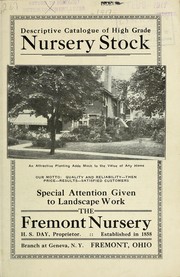 Descriptive catalogue of high grade nursery stockFremont Nursery · 1916
 Albert J. Stahelin presents the garden guide for 1937Stahelin's Nursery · 1937
- 📕Contracts for woodland owners and Christmas tree growersS. Bowers · 2005
- 📕Contracts for woodland owners and Christmas tree growersW. Alfred Mukatis · 1996
- 📕Contracts for woodland owners and Christmas trees growersW. Alfred Mukatis · 1986
- 📕Small Business Natural Resource Development and Employment Opportunity Act--H.R. 4123United States. Congress. House. Committee on Small Business. Subcommittee on SBA, the General Economy, and Minority Enterprise Development. · 1990
Ranked by number of editions on Open Library, a rough measure of how lasting a book is.
🔗 Related topics
- Binary tree In computer science, a binary tree is a tree data structure in which each node has at most two children, referred to as the left child and the right child…
- Tree traversal In computer science, tree traversal (also known as tree search and walking the tree) is a form of graph traversal and refers to the process of visiting…
- Sethi–Ullman algorithm In computer science, the Sethi–Ullman algorithm is an algorithm named after Ravi Sethi and Jeffrey D. Ullman, its inventors, for translating abstract syntax…
- Wedderburn–Etherington number In mathematics and computer science, the Wedderburn–Etherington numbers are an integer sequence named after Ivor Malcolm Haddon Etherington and Joseph…
- Quadtree A quadtree is a tree data structure in which each internal node has exactly four children. Quadtrees are the two-dimensional analog of octrees and are…
- Tree (abstract data type) In computer science, a tree is a widely used abstract data type that represents a hierarchical tree structure with a set of connected nodes. Each node…
- M-ary tree In graph theory, an m-ary tree (for nonnegative integers m) (also known as n-ary, k-ary, k-way or generic tree) is an arborescence (or, for some authors…
- Treap In computer science, the treap and the randomized binary search tree are two closely related forms of binary search tree data structures that maintain…