Everything about Transition path sampling
Transition path sampling (TPS) is a rare-event sampling method used in computer simulations of rare events: physical or chemical transitions of a system from one stable state to another that occur too rarely to be observed on a computer timescale. Examples include protein folding, chemical reactions and nucleation. Standard simulation tools such as molecular dynamics can generate the dynamical trajectories of all the atoms in the system. However, because of the gap in accessible time-scales between simulation and reality, even present supercomputers might require years of simulations to show an event that occurs once per millisecond without some kind of acceleration. Wikipedia →
🧭 Start here: a 6-step reading path
- Read the overview: Transition path samplingA 5-minute orientation
- Skim a recent paper: Combining Transition Path Sampling with Data-Driven Collective Variables through a Reactivity-Biased Shooting AlgorithmInfluential work since 2022
- Pick up a classic book: Software EngineeringThe most-reprinted book on the subject
- Read the landmark paper: Transition path sampling and the calculation of rate constantsCited 987 times
- Go sideways: Rare event samplingA closely related topic
- Go sideways: Stochastic process rare event samplingA closely related topic
📖 Definitions
No dictionary entry for this exact phrase.
🏆 Landmark papers (most cited)
Transition path sampling and the calculation of rate constants
Efficient transition path sampling: Application to Lennard-Jones cluster rearrangements
Transition-path sampling of β-hairpin folding
Water Evaporation: A Transition Path Sampling Study
Reaction coordinate of an enzymatic reaction revealed by transition path sampling
Transition path sampling of cavitation between molecular scale solvophobic surfaces
Efficient transition path sampling for nonequilibrium stochastic dynamics
Transition path sampling and forward flux sampling. Applications to biological systems
🆕 Influential since 2022
Combining Transition Path Sampling with Data-Driven Collective Variables through a Reactivity-Biased Shooting Algorithm
Challenges and opportunities for machine learning potentials in transition path sampling: alanine dipeptide and azobenzene studies
STIM1 transmembrane helix dimerization captured by AI-guided transition path sampling
Optimal control for sampling the transition path process and estimating rates
AI-guided transition path sampling of lipid flip-flop and membrane nanoporation
📚 Books worth reading
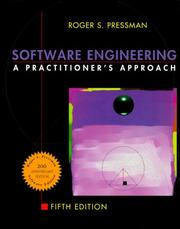 Software EngineeringRoger S. Pressman, Bruce Maxim · 1982
 The personal MBAJosh Kaufman · 2010
 Data Communications and NetworkingBehrouz A. Forouzan, Catherine Ann Coombs · 2000
 Developing multicultural counseling competenceDanica G. Hays, Bradley T. Erford · 2010
 Treaty Occupationay ToxicologySuelen Queiroz · 2010
 Modern methods of crystal structure predictionArtem R. Oganov · 2010
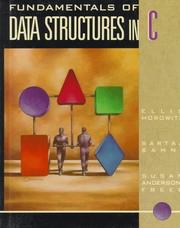 Fundamentals of data structures in CEllis Horowitz · 1993
 Digital systems testing and testable designMiron Abramovici · 1990
Ranked by number of editions on Open Library, a rough measure of how lasting a book is.
🔗 Related topics
- Rare event sampling Rare event sampling is an umbrella term for a group of computer simulation methods intended to selectively sample 'special' regions of the dynamic space…
- Stochastic process rare event sampling Stochastic-process rare event sampling (SPRES) is a rare-event sampling method in computer simulation, designed specifically for non-equilibrium calculations…
- Gillespie algorithm In probability theory and computational science, the Gillespie algorithm, also known as the stochastic simulation algorithm (SSA), is a method for generating…
- Single-molecule FRET Single-molecule fluorescence (or Förster) resonance energy transfer (or smFRET) is a biophysical technique used to measure distances at the 1-10 nanometer…
- Newton-X Newton-X is a general program for molecular dynamics simulations beyond the Born-Oppenheimer approximation. It has been primarily used for simulations…
- Stochastic simulation A stochastic simulation is a simulation of a system that has variables that can change stochastically (randomly) with individual probabilities. Realizations…
- Detailed balance In thermodynamics, the principle of detailed balance says that every process of energy transfer in one direction must also allow energy transfer in the…
- Eyring equation The Eyring equation (occasionally also known as Eyring–Polanyi equation) is an equation used in chemical kinetics to describe changes in the rate of a…