Everything about Topological data analysis
Analysis of datasets using techniques from topology
In applied mathematics, topological data analysis (TDA) is an approach to the analysis of datasets using techniques from topology. Extraction of information from datasets that are high-dimensional, incomplete and noisy is generally challenging. TDA provides a general framework to analyze such data in a manner that is insensitive to the particular metric chosen and provides dimensionality reduction and robustness to noise. The topological foundation bestows functoriality—the consistent translation of objects and relationships among them, making it amenable to other modern mathematical tools. Wikipedia →
🧭 Start here: a 6-step reading path
- Read the overview: Topological data analysisA 5-minute orientation
- Skim a recent paper: Topological data analysis in biomedicine: A reviewInfluential work since 2022
- Pick up a classic book: Cognitive work analysisThe most-reprinted book on the subject
- Read the landmark paper: Topological Data AnalysisCited 450 times
- Go sideways: Persistence moduleA closely related topic
- Go sideways: Persistent homologyA closely related topic
📖 Definitions
No dictionary entry for this exact phrase.
🏆 Landmark papers (most cited)
Topological Data Analysis
Topological Data Analysis of Biological Aggregation Models
Topological analysis of data
Topological data analysis of zebrafish patterns
Time Series Classification via Topological Data Analysis
Applications of Topological Data Analysis in Oncology
Hypothesis testing for topological data analysis
Time series classification via topological data analysis
🆕 Influential since 2022
Topological data analysis in biomedicine: A review
A Survey of Vectorization Methods in Topological Data Analysis
Towards quantum advantage via topological data analysis
Topological Data Analysis for Multivariate Time Series Data
A Review of Topological Data Analysis and Topological Deep Learning in Molecular Sciences
📚 Books worth reading
 Cognitive work analysisDaniel P. Jenkins · 2008
- 📕Computational Topology for Biomedical Image and Data AnalysisRodrigo Rojas Moraleda, Nektarios A. Valous · 2019
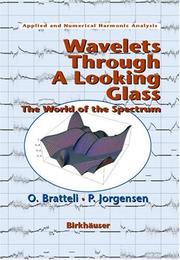 Wavelets through a looking glassOla Bratteli, Palle Jorgensen · 2002
 Geometric ModellingH. Hagen, Gerald E. Farin · 1995
 Topological methods in data analysis and visualization IIRonald Peikert · 2012
 Spatial structure and the microcomputerA. N. Barrett, Alan L. Mackay · 1987
 Visualization and mathematicsKonrad Polthier · 1997
 Visualization and Mathematics IIIHans-Christian Hege · 2011
Ranked by number of editions on Open Library, a rough measure of how lasting a book is.
🔗 Related topics
- Persistence module A persistence module is a mathematical structure in persistent homology and topological data analysis that formally captures the persistence of topological…
- Persistent homology In topological data analysis, persistent homology is a method for computing topological features of a space at different spatial resolutions. More persistent…
- Interleaving distance In topological data analysis, the interleaving distance is a measure of similarity between persistence modules, a common object of study in topological…
- Persistence barcode In topological data analysis, a persistence barcode, sometimes shortened to barcode, is an algebraic invariant associated with a filtered chain complex…
- Multicover bifiltration The multicover bifiltration is a two-parameter sequence of nested topological spaces derived from the covering of a finite set in a metric space by growing…
- Persistent Betti number In persistent homology, a persistent Betti number is a multiscale analog of a Betti number that tracks the number of topological features that persist…
- Degree-Rips bifiltration The degree-Rips bifiltration is a simplicial filtration used in topological data analysis for analyzing the shape of point cloud data. It is a multiparameter…
- Offset filtration The offset filtration (also called the "union-of-balls" or "union-of-disks" filtration) is a growing sequence of metric balls used to detect the size and…