Live briefing

Everything about Time-sharing
Computing resource shared by concurrent users
In computing, time-sharing is the concurrent sharing of a computing resource among many tasks or users by giving each task or user a small slice of processing time. This quick switch between tasks or users gives the illusion of simultaneous execution. It enables multi-tasking by a single user or enables multiple-user sessions. Wikipedia →
🧭 Start here: a 6-step reading path
- Read the overview: Time-sharingA 5-minute orientation
- Skim a recent paper: Improving concurrency and memory usage in distributed operating systems for lightweight manycores via cooperative time-sharing lightweight tasksInfluential work since 2022
- Pick up a classic book: Operating system principlesThe most-reprinted book on the subject
- Read the landmark paper: UNIX Time-Sharing System: The MERT Operating SystemCited 16 times
- Go sideways: Timeline of operating systemsA closely related topic
- Go sideways: Conversational Monitor SystemA closely related topic
📖 Definitions
No dictionary entry for this exact phrase.
🗂️ The subject at a glance
🏆 Landmark papers (most cited)
UNIX Time-Sharing System: The MERT Operating System
Resource management for a medium scale time-sharing operating system
GEORGE 3—A general purpose time sharing and operating system
UNIX Time-Sharing System: The UNIX Operating System as a Base for Applications
XINIX time-sharing operating system
UNIX Time-Sharing System: RBCS/RCMAS-Converting to the MERT Operating System
Numerical integration in ordinary differential equations operating under ILLIAC II time-sharing system
Implementing Real-Time Scheduling in a Time-Sharing Operating System
🆕 Influential since 2022
📚 Books worth reading
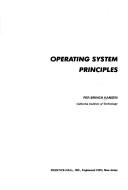 Operating system principlesPer Brinch Hansen · 1973
- 📕TFILEG. Lawrence Lane · 1978
 A simulation study of the CP/67 time-sharing systemBrian John Stanger · 1970
- 📕SAS companion for OS operating systems and TSOSAS Institute · 1984
- 📕UNIX programmer's manualKen Thompson · 1974
- 📕RSTS/E system manager's guide. · 1975
Ranked by number of editions on Open Library, a rough measure of how lasting a book is.
🔗 Related topics
- Timeline of operating systems This article presents a timeline of events in the history of computer operating systems from 1949 to the current day. For a narrative explaining the overall…
- Conversational Monitor System The Conversational Monitor System (CMS, originally Cambridge Monitor System) is a simple interactive single-user operating system. CMS was originally developed…
- History of CP/CMS This article covers the History of CP/CMS — the historical context in which the IBM time-sharing virtual machine operating system was built. CP/CMS development…
- General Comprehensive Operating System General Comprehensive Operating System (GCOS, /ˈdʒiːkoʊs/; originally GECOS, General Electric Comprehensive Operating Supervisor) is a family of operating…
- Dartmouth Time-Sharing System The Dartmouth Time-Sharing System (DTSS) is a discontinued operating system first developed at Dartmouth College between 1963 and 1964. It was the first…
- History of operating systems Computer operating systems (OSes) provide a set of functions needed and used by most application programs on a computer, and the links needed to control…
- GE-600 series The GE-600 series is a family of 36-bit mainframe computers originating in the 1960s, built by General Electric (GE). When GE left the mainframe business…
- Interdata 7/32 and 8/32 The Model 7/32 and Model 8/32 were 32-bit minicomputers introduced by Perkin-Elmer after they acquired Interdata, Inc., in 1973. The 7/32 and 8/32 are…