Live briefing
Everything about Test method
Procedure that produces a test result
A test method is a method for a test in science or engineering, such as a physical test, chemical test, or statistical test. It is a specified procedure that produces a test result. To ensure accurate and relevant results, a test method should be "explicit, unambiguous, and experimentally feasible.", as well as effective and reproducible. Wikipedia →
🧭 Start here: a 6-step reading path
- Read the overview: Test methodA 5-minute orientation
- Skim a recent paper: A mixed placebo test for synthetic control methodInfluential work since 2022
- Pick up a classic book: Toxicity testing using microorganismsThe most-reprinted book on the subject
- Read the landmark paper: Trim and Fill: A Simple Funnel‐Plot–Based Method of Testing and Adjusting for Publication Bias in Meta‐AnalysisCited 12,424 times
- Go sideways: Measurement system analysisA closely related topic
- Go sideways: Round-robin testA closely related topic
📖 Definitions
No dictionary entry for this exact phrase.
🗂️ The subject at a glance
🏆 Landmark papers (most cited)
Trim and Fill: A Simple Funnel‐Plot–Based Method of Testing and Adjusting for Publication Bias in Meta‐Analysis
Antibiotic Susceptibility Testing by a Standardized Single Disk Method
Statistical method for testing the neutral mutation hypothesis by DNA polymorphism.
Test method: GH
Tin Whisker Test Method Development
A New Contamination Test Method
A new immunity test method
A failure mechanism consistency test method for accelerated degradation test
🆕 Influential since 2022
A mixed placebo test for synthetic control method
Digital Twin Test Method With LTE-V2X for Autonomous Vehicle Safety Test
A reliability demonstration test plan derivation method based on subsystem test data
Toxicity Test of Strong Drug Using the BSLT (Brine Shrimp Lethality Test) Method
Geometric error compensation method using the Laser R-test
📚 Books worth reading
 Toxicity testing using microorganismsGabriel Bitton · 1986
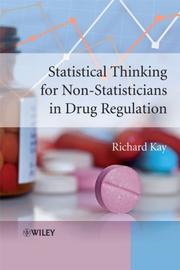 Statistical Thinking for Non-Statisticians in Drug RegulationRichard Kay · 2007
 Use Your HeadTony Buzan · 1974
 Handbook of psychological assessmentGary Groth-Marnat · 2003
 Assessment of childrenJerome M. Sattler · 1988
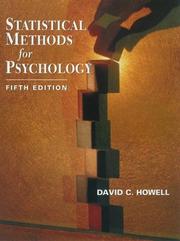 Statistical methods for psychologyDavid C. Howell · 1982
 Measurement by the physical educatorMiller, David K. · 1988
 Comprehending Behavioral Statistics (with CD)Russell T. Hurlburt · 1994
Ranked by number of editions on Open Library, a rough measure of how lasting a book is.
🔗 Related topics
- Measurement system analysis A measurement system analysis (MSA) is a thorough assessment of a measurement process, and typically includes a specially designed experiment that seeks…
- Round-robin test In experimental methodology, a round-robin test is an interlaboratory test (measurement, analysis, or experiment) performed independently several times…
- Physical test A physical test is a qualitative or quantitative procedure that consists of determination of one or more characteristics of a given product, process or…
- Analytical quality control Analytical quality control (AQC) refers to all those processes and procedures designed to ensure that the results of laboratory analysis are consistent…
- Package testing Package testing or packaging testing involves the measurement of a characteristic or property involved with packaging. This includes packaging materials…
- Quality of analytical results Quality of measurements made in chemistry and other areas is an important issue in today's world as measurements influence quality of life, cross-border…
- Forensic metrology Forensic metrology is a branch of metrology (the science of measurements) applied to forensic sciences. Metrology has evolved various techniques for assessing…
- Accuracy and precision Accuracy and precision are measures of observational error; accuracy is how close a given set of measurements is to the true value and precision is how…