Everything about Telegraph code
One of the character encodings used to transmit information by telegraphy
A telegraph code is one of the character encodings used to transmit information by telegraphy. Morse code is the best-known such code. Telegraphy usually refers to the electrical telegraph, but telegraph systems using the optical telegraph were in use before that. A code consists of a number of code points, each corresponding to a letter of the alphabet, a numeral, or some other character. In codes intended for machines rather than humans, code points for control characters, such as carriage return, are required to control the operation of the mechanism. Each code point is made up of a number of elements arranged in a unique way for that character. There are usually two types of element, but more element types were employed in some codes not intended for machines. For instance, American Morse code had about five elements, rather than the two of International Morse Code. Wikipedia →
🧭 Start here: a 6-step reading path
- Read the overview: Telegraph codeA 5-minute orientation
- Skim a recent paper: Reconfigurable Resistive Switching Memory for Telegraph Code Sensing and Recognizing Reservoir Computing Systems (Small 40/2024)Influential work since 2022
- Pick up a classic book: The Code BookThe most-reprinted book on the subject
- Read the landmark paper: Reconfigurable Resistive Switching Memory for Telegraph Code Sensing and Recognizing Reservoir Computing SystemsCited 8 times
- Go sideways: Morse codeA closely related topic
- Go sideways: Foy–Breguet telegraphA closely related topic
📖 Definitions
Noun A character encoding used to transmit information through telegraphy machines.
Noun A mapping of arbitrary words to full sentences in a particular domain, to allow messages to be shortened and sent more cheaply by telegraph.
🏆 Landmark papers (most cited)
Reconfigurable Resistive Switching Memory for Telegraph Code Sensing and Recognizing Reservoir Computing Systems
The International Telegraph Conference of Brussels and the Problem of Code Language
CODEST: A New Pulse-Code Modulation System for Telegraph and Data Transmission
An Easy Telegraph Code
Telegraph Companies. Mental Anguish. Sec. 1294i (10), Va. Code 1904
Telegraph codes and code convertors
Telegraph codes and code convertors
Correlation recognition of a redundant 5-unit telegraph code
🆕 Influential since 2022
📚 Books worth reading
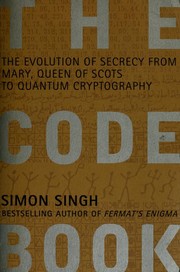 The Code BookSimon Singh · 1999
 Lieber's standard telegraphic codeBenjamin Franklin Lieber · 1896
- 📕Ships' code and decode bookGreat Britain. Meteorological Office. · 1964
- 📕Manual on codesWorld Meteorological Organization. · 1971
 A Dangerous LegacyElizabeth Camden · 2017
- 📕Dictionnaire abréviatif chiffréF.-J Sittler · 1879
 The morse code for radio amateursMargaret Mills · 1967
 The new general and mining telegraph codeCharles Algernon Moreing · 1891
Ranked by number of editions on Open Library, a rough measure of how lasting a book is.
🔗 Related topics
- Morse code Morse code is a telecommunications method which encodes text characters as standardized sequences of two different signal durations, called dots and dashes…
- Foy–Breguet telegraph The Foy–Breguet telegraph, also called the French telegraph, was an electrical telegraph of the needle telegraph type developed by Louis-François-Clement…
- American Morse code American Morse Code — also known as Railroad Morse — is the latter-day name for the original version of the Morse Code, developed in the mid-1840s by Samuel…
- Baudot code The Baudot code (French pronunciation: [bodo]) is an early character encoding for telegraphy invented by Émile Baudot in the 1870s. It was the predecessor…
- Teleprinter A teleprinter (teletypewriter, teletype or TTY) is an electromechanical device used to send and receive typed messages through various communications channels…
- Electrical telegraph Electrical telegraphy is point-to-point distance communicating via sending electric signals over wire, a system primarily used from the 1840s until the…
- Prosigns for Morse code Procedural signs or prosigns are shorthand signals used in Morse code telegraphy, for the purpose of simplifying and standardizing procedural protocols…
- Cooke and Wheatstone telegraph The Cooke and Wheatstone telegraph was an early electrical telegraph system dating from the 1830s invented by English inventor William Fothergill Cooke…