Live briefing
Everything about Task analysis
Analysis of how a task is accomplished
Task analysis is a fundamental tool of human factors engineering. It entails analyzing how a task is accomplished, including a detailed description of both manual and mental activities, task and element durations, task frequency, task allocation, task complexity, environmental conditions, necessary clothing and equipment, and any other unique factors involved in or required for one or more people to perform a given task. Wikipedia →
🧭 Start here: a 6-step reading path
- Read the overview: Task analysisA 5-minute orientation
- Skim a recent paper: Multi-Task Momentum Distillation for Multimodal Sentiment AnalysisInfluential work since 2022
- Pick up a classic book: Cognitive task analysisThe most-reprinted book on the subject
- Read the landmark paper: Cognitive task analysis for trainingCited 108 times
- Go sideways: Cognitive ergonomicsA closely related topic
- Go sideways: Ecological interface designA closely related topic
📖 Definitions
No dictionary entry for this exact phrase.
🏆 Landmark papers (most cited)
Cognitive task analysis for training
Cognitive Task Analysis–Based Training
Cognitive Task Analysis
Hierarchical planning as method for task analysis: the example of office task analysis
Spelling?A task analysis
VLSP SHARED TASK: SENTIMENT ANALYSIS
Task analysis interview based on task ontology
Scenarios and task analysis
🆕 Influential since 2022
Multi-Task Momentum Distillation for Multimodal Sentiment Analysis
Effect of cognitive task complexity on dual task postural stability: a systematic review and meta-analysis
Applying cognitive task analysis to health services research
Dynamic network analysis of electrophysiological task data
Automated analysis of cohesive features in L2 writing: Examining effects of task complexity and task repetition
📚 Books worth reading
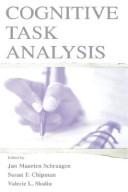 Cognitive task analysisValerie L. Shalin, John Annett · 2000
 Functional job analysisSidney A. Fine, Steven F. Cronshaw · 1999
 Perspectives on cognitive task analysisLaura G. Militello, Robert R. Hoffman · 2008
- 📕Program evaluation issuesUnited States. General Accounting Office · 1988
 Naturalistic decision making and macrocognitionJan Maarten Schraagen, Raanan Lipshitz · 2008
 Analysing performance problems, or, You really oughta wannaRobert Frank Mager, Robert F. Mager · 1984
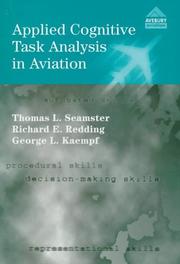 Applied cognitive task analysis in aviationThomas L. Seamster · 1997
 The Seven Competences of the Sustainable ProfessionalNiko Roorda, Anouchka Rachelson · 2018
Ranked by number of editions on Open Library, a rough measure of how lasting a book is.
🔗 Related topics
- Cognitive ergonomics Cognitive ergonomics is a scientific discipline that studies, evaluates, and designs tasks, jobs, products, environments and systems and how they interact…
- Ecological interface design Ecological interface design (EID) is an approach to interface design that was introduced specifically for complex sociotechnical, real-time, and dynamic…
- Ergonomics Ergonomics, also known as human factors or human factors engineering (HFE), is the scientific study to understand the interaction between humans and other…
- Usability Usability or user-friendliness is the capacity of a system to provide a condition for its users to perform the tasks safely, effectively, and efficiently…
- Cognitive walkthrough The cognitive walkthrough method is a usability inspection method used to identify usability issues in interactive systems, focusing on how easy it is…
- GOMS GOMS is a specialized human information processor model for human-computer interaction observation that describes a user's cognitive structure on four…
- Usability goals Tools, devices or software (as diverse as a TV remote control, the interface of an oven, or a word processor) must be evaluated before their release on…
- Cognitive work analysis Cognitive work analysis (CWA) is a conceptual framework developed to model complex sociotechnical systems with a focus on understanding work constraints…