Live briefing
Everything about Syntax-directed translation
Syntax-directed translation refers to a method of compiler implementation where the source language translation is completely driven by the parser. Wikipedia →
🧭 Start here: a 6-step reading path
- Read the overview: Syntax-directed translationA 5-minute orientation
- Skim a recent paper: Syntax-aware bidirectional decoding Neural Machine Translation modelInfluential work since 2022
- Pick up a classic book: Les lettres de mon moulinThe most-reprinted book on the subject
- Read the landmark paper: Syntax directed translations and the pushdown assemblerCited 66 times
- Go sideways: LitheA closely related topic
- Go sideways: Compiler-compilerA closely related topic
📖 Definitions
No dictionary entry for this exact phrase.
🗂️ The subject at a glance
🏆 Landmark papers (most cited)
Syntax directed translations and the pushdown assembler
Properties of syntax directed translations
Syntax-Directed Attention for Neural Machine Translation
Generalized Syntax Directed Translation, Tree Transducers, and Linear Space
Stochastic Syntax-Directed Translation Schemata for Correction of Errors in Context-Free Languages
Semantic-syntax-directed translation
Behavioral Synthesis of Asynchronous Circuits Using Syntax Directed Translation as Backend
Multi-function radar emitter identification based on stochastic syntax-directed translation schema
🆕 Influential since 2022
📚 Books worth reading
 Les lettres de mon moulinAlphonse Daudet, Editions Editions AOJB · 1869
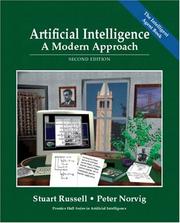 Artificial intelligenceStuart J. Russell, Peter Norvig · 1994
 A designer's guide to asynchronous VLSIPeter A. Beerel · 2010
 The syntax and idioms of HindustaniSimon Matthews Edwin Kempson · 1890
 Principles of compiler designAlfred V. Aho, Jeffrey D. Ullman · 1977
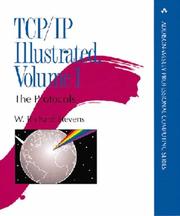 TCP/IP IllustratedW. Richard Stevens, Kevin R. Fall · 1993
 Theory of computationDerick Wood · 1987
- 📕Productivity in Argument SelectionAmir Zeldes · 2012
Ranked by number of editions on Open Library, a rough measure of how lasting a book is.
🔗 Related topics
- Lithe Lithe is an experimental programming language created in 1982 by David Sandberg at the University of Washington which allows the programmer to freely choose…
- Compiler-compiler In computer science, a compiler-compiler or compiler generator is a programming tool that creates a parser, interpreter, or compiler from some form of…
- META II META II is a domain-specific programming language for writing compilers. It was created in 1963–1964 by Dewey Val Schorre at University of California,…
- Attribute grammar An attribute grammar is a formal way to supplement a formal grammar with semantic information processing. Semantic information is stored in attributes…
- Syntax (programming languages) The syntax of computer source code is code structured and ordered restricted to computer language rules. Like a natural language, a computer language (i…
- Parsing expression grammar In computer science, a parsing expression grammar (PEG) is a type of analytic formal grammar, i.e. it describes a formal language in terms of a set of…
- LR parser In computer science, LR parsers are a type of bottom-up parser that analyse deterministic context-free languages in linear time. There are several variants…
- Backus–Naur form In computer science, Backus–Naur form or Pāṇini–Backus Form (BNF or PBF, pronounced /ˌbækəs ˈnaʊər/), also known as Backus normal form, is a notation system…