Live briefing

Everything about Superuser
Special user account used for system administration
In computing, the superuser is a special user account used for system administration. Depending on the operating system (OS), the actual name of this account might be root, administrator, admin or supervisor. The principle of least privilege recommends that most users and applications run under an ordinary account to perform their work, as a superuser account is capable of making unrestricted, potentially adverse, system-wide changes. Wikipedia →
🧭 Start here: a 6-step reading path
- Read the overview: SuperuserA 5-minute orientation
- Pick up a classic book: How Linux WorksThe most-reprinted book on the subject
- Read the landmark paper: CORTRAK Superuser Competency Assessment and Training RecommendationsCited 27 times
- Go sideways: Comparison of privilege authorization featuresA closely related topic
- Go sideways: Privilege (computing)A closely related topic
📖 Definitions
Noun A user with complete access to the operating system and its configuration.
🗂️ The subject at a glance
🏆 Landmark papers (most cited)
CORTRAK Superuser Competency Assessment and Training Recommendations
EMS-STARS: Emergency Medical Services “Superuser” Transport Associations: An Adult Retrospective Study
Effect Of A “No Superuser Opioid Prescription” Policy On ED Visits And Statewide Opioid Prescription
Informing the Design and Evaluation of Superuser Care Management Initiatives
Establishing forensics capabilities in the presence of superuser insider threats
The Persistent Emergency Department Superuser: Defining a Population to Target Limited Resources
087 Characterizing the Priapism Superuser: A Longitudinal, Population-based Study
Sugar Superuser
📚 Books worth reading
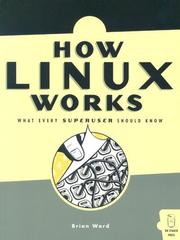 How Linux WorksBrian Ward · 2004
- 📕SuperusersRandy Deutsch · 2019
 The UNIX operating systemChristian, Kaare, Kaare Christian · 1983
- 📕What Can I Say?Catherine Newman · 2022
 Raspberry Pi CookbookSimon Monk · 2014
 The membership economyRobbie Kellman Baxter · 2015
 Ajax for dummiesSteven Holzner · 2006
 SuperuseEd van Hinte · 2007
Ranked by number of editions on Open Library, a rough measure of how lasting a book is.
🔗 Related topics
- Comparison of privilege authorization features A number of computer operating systems employ security features to help prevent malicious software from gaining sufficient privileges to compromise the…
- Privilege (computing) In computing, privilege is defined as the delegation of authority to perform security-relevant functions on a computer system. A privilege allows a user…
- Sudo sudo (/suː.duː/ or /ˈsuː.doʊ/) is a shell command on Unix-like operating systems that enables a user to run a program with the security privileges of another…
- Su (Unix) The Unix command su, which stands for "substitute user" (or historically "superuser"), is used by a computer user to execute commands with the privileges…
- User Account Control User Account Control (UAC) is a mandatory access control enforcement feature introduced with Microsoft's Windows Vista and Windows Server 2008 operating…
- Security Support Provider Interface Security Support Provider Interface (SSPI) is a component of Windows API that performs security-related operations such as authentication. SSPI functions…
- Home directory A home directory is a file system directory on a multi-user operating system containing files for a given user of the system. The specifics of the home…
- Logical security Logical security consists of software safeguards for an organization's systems, including user identification and password access, authenticating, access…