Live briefing
Everything about Subnormal number
Denormalized floating-point numbers near zero
In computer science, subnormal numbers are the subset of denormalized numbers that fill the underflow gap around zero in floating-point arithmetic. Any non-zero number with magnitude smaller than the smallest positive normal number is subnormal, while denormal can also refer to numbers outside that range. Wikipedia →
🧭 Start here: a 6-step reading path
- Read the overview: Subnormal numberA 5-minute orientation
- Pick up a classic book: SPARC Architecture, Assembly Language Programming, and CThe most-reprinted book on the subject
- Read the landmark paper: CONCEPTS OF NUMBER OF THE MENTALLY SUBNORMAL STUDIED BY PIAGET'S METHODCited 27 times
- Go sideways: IEEE 754-1985A closely related topic
- Go sideways: Extended precisionA closely related topic
📖 Definitions
No dictionary entry for this exact phrase.
🗂️ The subject at a glance
🏆 Landmark papers (most cited)
📚 Books worth reading
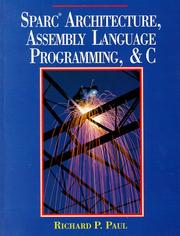 SPARC Architecture, Assembly Language Programming, and CRichard P. Paul · 1994
- 📕Number conservation in educationally subnormal childrenP. B. Mitchell
- 📕Number unknown · 1965
- 📕Number unknownChurch of England. Working Party on the Pastoral Care and Religious Education of Severely Subnormal Children. · 1965
- 📕Number unknownChurch of England · 1965
Ranked by number of editions on Open Library, a rough measure of how lasting a book is.
🔗 Related topics
- IEEE 754-1985 IEEE 754-1985 is a historic industry standard for representing floating-point numbers in computers, officially adopted in 1985 and superseded in 2008 by…
- Extended precision Extended precision refers to floating-point number formats that provide greater precision than the basic floating-point formats. Extended-precision formats…
- Arithmetic underflow The term arithmetic underflow (also floating-point underflow, or just underflow) is a condition in a computer program where the result of a calculation…
- IEEE 754 The IEEE Standard for Floating-Point Arithmetic (IEEE 754) is a technical standard for floating-point arithmetic originally established in 1985 by the…
- Floating-point arithmetic In computing, floating-point arithmetic (FP) is arithmetic on subsets of real numbers formed by a significand (a signed sequence of a fixed number of digits…
- Bfloat16 floating-point format The bfloat16 (brain floating point) floating-point format is a computer number format occupying 16 bits in computer memory; it represents a wide dynamic…
- Decimal64 floating-point format In computing, decimal64 is a decimal floating-point computer number format that occupies 8 bytes (64 bits) in computer memory. The format was formally…
- Decimal floating point Decimal floating-point (DFP) arithmetic refers to both a representation and operations on decimal floating-point numbers. Working directly with decimal…