Live briefing

Everything about String (computer science)
Sequence of characters, data type
In computer programming, a string is traditionally a sequence of characters, either as a literal constant or as some kind of variable. The latter may allow its elements to be mutated and the length changed, or it may be fixed. A string is often implemented as an array data structure of bytes that stores a sequence of elements, typically characters, using some character encoding. More general, string may also denote a sequence of data other than just characters. Wikipedia →
🧭 Start here: a 6-step reading path
- Read the overview: String (computer science)A 5-minute orientation
- Pick up a classic book: Confluence of cosmology, massive neutrinos, elementary particles, and gravitationThe most-reprinted book on the subject
- Go sideways: Variable-length encodingA closely related topic
- Go sideways: Null-terminated stringA closely related topic
📖 Definitions
No dictionary entry for this exact phrase.
🏆 Landmark papers (most cited)
- No matching papers found.
📚 Books worth reading
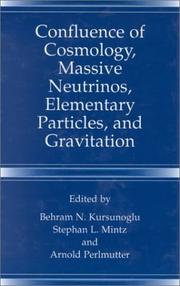 Confluence of cosmology, massive neutrinos, elementary particles, and gravitationBehram Kurşunoğlu, Stephan L. Mintz · 1999
 Natural language information processingNaomi Sager · 1980
 Fracture MechanicsAlan T. Zehnder · 2012
 Steps towards parsing of query sequences to a database /c [by] Neil C. RoweNeil C. Rowe · 1984
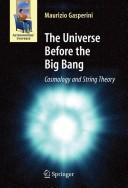 The Universe Before the Big BangMaurizio Gasperini · 2008
 D-BraneKōji Hashimoto · 2012
Ranked by number of editions on Open Library, a rough measure of how lasting a book is.
🔗 Related topics
- Variable-length encoding In coding theory, variable-length encoding is a symbol encoding scheme in which codes of differing lengths are used to encode symbols for representation…
- Null-terminated string In computer programming, a null-terminated string is a character string stored as an array containing the characters and terminated with a null character…
- Wide character A wide character is a computer character datatype that generally has a size greater than the traditional 8-bit character. The increased datatype size allows…
- Comparison of Unicode encodings This article compares Unicode encodings in two types of environments: 8-bit clean environments, and environments that forbid the use of byte values with…
- UTF-32 UTF-32 (32-bit Unicode Transformation Format), sometimes called UCS-4, is a fixed-length encoding used to encode Unicode code points that uses exactly…
- UTF-8 UTF-8 is a character encoding standard used for electronic communication. Defined by the Unicode Standard, the name is derived from Unicode Transformation…
- Lempel–Ziv–Welch Lempel–Ziv–Welch (LZW) is a universal lossless compression algorithm created by Abraham Lempel, Jacob Ziv, and Terry Welch. It was published by Welch in…
- Base64 Base64 is a binary-to-text encoding that uses 64 printable characters to represent each 6-bit segment of a sequence of byte values. As for all binary-to-text…