Everything about Stoicism
Ancient philosophy

Stoicism is a philosophical movement and practical guide to living, emphasizing daily self-discipline and moral improvement, which originated in the Hellenistic period of ancient Greece and continued well into the Roman Imperial period. The ancient Stoics believed that the universe operated according to reason, or logos, providing a unified account of the world, constructed from ideals of rational discourse, monistic physics, and naturalistic ethics. These ideals constitute virtue, which is necessary for the Stoic goal of "living a well-reasoned life". Wikipedia →
🧭 Start here: a 6-step reading path
- Read the overview: StoicismA 5-minute orientation
- Skim a recent paper: Misunderstood Stoicism: The negative Association Between Stoic Ideology and well-BeingInfluential work since 2022
- Pick up a classic book: MeditationsThe most-reprinted book on the subject
- Read the landmark paper: Development of a Pain Attitudes Questionnaire to Assess Stoicism and Cautiousness for Possible Age DifferencesCited 94 times
- Go sideways: ChrysippusA closely related topic
- Go sideways: Hellenistic philosophyA closely related topic
📖 Definitions
Noun A school of philosophy popularized during the Roman Empire that emphasized reason as a means of understanding the natural state of things, or logos, and as a means of freeing oneself from emotional distress.
Noun A real or pretended indifference to pleasure or pain; insensibility; impassiveness.
🏆 Landmark papers (most cited)
Development of a Pain Attitudes Questionnaire to Assess Stoicism and Cautiousness for Possible Age Differences
Stoicism and sensation seeking: Male vulnerabilities for the acquired capability for suicide
Troubling stoicism: Sociocultural influences and applications to health and illness behaviour
Stoicism and the Principate
Stoicism: Its Relation to Gender, Attitudes Toward Poverty, and Reactions to Emotive Material
Can attitudes of stoicism and cautiousness explain observed age‐related variation in levels of self‐rated pain, mood disturbance and functional interference in chronic pain patients?
Big boys don’t cry: An investigation of stoicism and its mental health outcomes
Rural adolescents' help‐seeking intentions for emotional problems: The influence of perceived benefits and stoicism
🆕 Influential since 2022
Misunderstood Stoicism: The negative Association Between Stoic Ideology and well-Being
Stoicism, philosophy as a way of life and Negative Capability: Developing a capacity for working in radical uncertainty
The Therapy of Desire in Times of Crisis: Lessons Learned from Buddhism and Stoicism
Hidden Curriculum and the Demographic Stoicism That Keeps Women and Minorities Away From Radiology: A Mixed-Methods Study of Medical Students
Stoicism and death acceptance: integrating Stoic philosophy in cognitive behaviour therapy for death anxiety
📚 Books worth reading
 MeditationsMarcus Aurelius, Robin Waterfield · 2015
 Die StoaMax Pohlenz · 1948
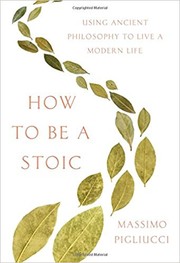 How to Be a StoicMassimo Pigliucci · 2017
 Stoics and saintsJames Baldwin Brown · 1893
 The Daily Stoic JournalRyan Holiday, Stephen Hanselman · 2017
 Roman Stoicism (Routledge Revivals)Edward Vernon Arnold · 2013
 Stoic Doctrine of ProvidenceBernard Collette · 2021
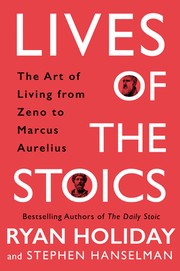 Lives of the StoicsRyan Holiday, Stephen Hanselman · 2020
Ranked by number of editions on Open Library, a rough measure of how lasting a book is.
🔗 Related topics
- Chrysippus Chrysippus of Soli (/kraɪˈsɪpəs, krɪ-/; Ancient Greek: Χρύσιππος ὁ Σολεύς, Chrusippos ho Soleus; c. 279 – c. 206 BC) was a Greek Stoic philosopher. He…
- Hellenistic philosophy Hellenistic philosophy is Ancient Greek philosophy corresponding to the Hellenistic period in Ancient Greece, from the death of Alexander the Great in…
- Susanne Bobzien Susanne Bobzien FBA (born 1960) is a German-born philosopher whose research interests focus on philosophy of logic and language, determinism and freedom…
- Sage (philosophy) A sage (Ancient Greek: σοφός, sophós), in classical philosophy, is someone who has attained wisdom. The term has also been used interchangeably with a…
- Pneuma Pneuma (Ancient Greek: πνεῦμα, romanized: pneûma) is an ancient Greek word for "breath", and in a religious context for "spirit". It has various technical…
- Hegemonikon The hegemonikon (Ancient Greek: ἡγεμονικόν, romanized: hēgemonikón, "ruling part") is a term in ancient Greek philosophy of mind for the soul's governing…
- Diodorus Cronus Diodorus Cronus (/ˌdaɪəˈdɔːrəs ˈkroʊnəs/; Greek: Διόδωρος Κρόνος; died c. 284 BC) was an Ancient Greek philosopher and dialectician connected to the Megarian…
- Stoic passions Stoic passions are various forms of emotional suffering in Stoicism, a school of Hellenistic philosophy. The passions are transliterated pathê from Greek…