Live briefing
Everything about Statistical inference
Process of using data analysis for predicting population data from sample data
Statistical inference is the process of using data analysis to infer properties of an underlying probability distribution. Inferential statistical analysis infers properties of a population, for example by testing hypotheses and deriving estimates. It is assumed that the observed data set is sampled from a larger population. Wikipedia →
🧭 Start here: a 6-step reading path
- Read the overview: Statistical inferenceA 5-minute orientation
- Skim a recent paper: Statistical inference on representational geometriesInfluential work since 2022
- Pick up a classic book: Introduction to Statistical Quality ControlThe most-reprinted book on the subject
- Read the landmark paper: Probable Inference, the Law of Succession, and Statistical InferenceCited 5,018 times
- Go sideways: Frequentist inferenceA closely related topic
- Go sideways: Interval estimationA closely related topic
📖 Definitions
Noun The drawing of conclusions about a population from a random sample drawn from it, or, more generally, about a random process from its observed behavior during a finite period of time.
🗂️ The subject at a glance
🏆 Landmark papers (most cited)
Probable Inference, the Law of Succession, and Statistical Inference
Statistical Inference
Statistical Inference.
Statistical Inference
Quantum Statistical Inference
Statistical Inference
Statistical Inference.
Simultaneous Statistical Inference
🆕 Influential since 2022
📚 Books worth reading
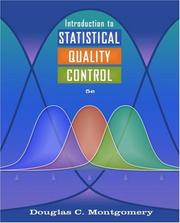 Introduction to Statistical Quality ControlDouglas C. Montgomery · 1985
 The Elements of Statistical LearningTrevor Hastie, Robert Tibshirani · 2001
 Methods for estimation and inference in modern econometricsStanislav Anatolyev · 2011
 Applied nonparametric statisticsWayne W. Daniel · 1978
- 📕Statistical InferenceMurray Aitkin · 2010
 Bayesian Inference with INLAVirgilio Gomez-Rubio · 2020
- 📕General Estimating Function TheoryJohn Hanfelt · 2009
- 📕Modeling and Reasoning with Bayesian NetworksAdnan Darwiche · 2009
Ranked by number of editions on Open Library, a rough measure of how lasting a book is.
🔗 Related topics
- Frequentist inference Frequentist inference is a type of statistical inference based in frequentist probability, which treats "probability" in equivalent terms to "frequency"…
- Interval estimation In statistics, interval estimation is the use of sample data to estimate an interval of possible values of a (sample) parameter of interest. This is in…
- Foundations of statistics The Foundations of Statistics are the mathematical and philosophical bases for statistical methods. These bases are the theoretical frameworks that ground…
- Fiducial inference Fiducial inference is one of a number of different types of statistical inference. These are rules, intended for general application, by which conclusions…
- Mathematical statistics Mathematical statistics is the application of probability theory and other mathematical concepts to statistics, as opposed to techniques for collecting…
- Confidence distribution In statistical inference, the concept of a confidence distribution (CD) has often been loosely referred to as a distribution function on the parameter…
- Likelihoodist statistics Likelihoodist statistics or likelihoodism is an approach to statistics that exclusively or primarily uses the likelihood function. Likelihoodist statistics…
- Likelihood function A likelihood function (often simply called the likelihood) gives the relative merit of various statistical models for describing a data set. Often the…