Everything about Statistical conclusion validity
Statistical conclusion validity is the degree to which conclusions about the relationship among variables based on the data are correct or "reasonable". This began as being solely about whether the statistical conclusion about the relationship of the variables was correct, but now there is a movement towards moving to "reasonable" conclusions that use: quantitative, statistical, and qualitative data. Fundamentally, two types of errors can occur: type I and type II. Statistical conclusion validity concerns the qualities of the study that make these types of errors more likely. Statistical conclusion validity involves ensuring the use of adequate sampling procedures, appropriate statistical tests, and reliable measurement procedures. Wikipedia →
🧭 Start here: a 6-step reading path
- Read the overview: Statistical conclusion validityA 5-minute orientation
- Skim a recent paper: The Influence of Study Selection Criteria on Statistical Conclusion Validity: A Simulation StudyInfluential work since 2022
- Pick up a classic book: Thinking, Fast and SlowThe most-reprinted book on the subject
- Read the landmark paper: Statistical Conclusion Validity: Some Common Threats and Simple RemediesCited 58 times
- Go sideways: StatisticsA closely related topic
- Go sideways: Statistical assumptionA closely related topic
📖 Definitions
No dictionary entry for this exact phrase.
🗂️ The subject at a glance
🏆 Landmark papers (most cited)
Statistical Conclusion Validity: Some Common Threats and Simple Remedies
Statistical Conclusion Validity of Rehabilitation Research
Statistical Conclusion Validity of Rehabilitation Research
Evaluating the statistical conclusion validity of weighted mean results in meta-analysis by analysing funnel graph diagrams
Statistical Conclusion Validity of Early Intervention Research with Handicapped Children
Statistical Conclusion Validity for Organizational Science Researchers: A Review
Confounds of insensitivity and blind luck: Statistical conclusion validity in stroke rehabilitation clinical trials
Missing Data Techniques and the Statistical Conclusion Validity of Survey-Based Alcohol and Drug Use Research Studies: A Review and Comment on Reproducibility
🆕 Influential since 2022
📚 Books worth reading
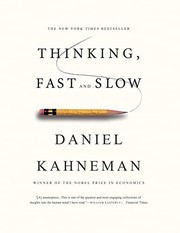 Thinking, Fast and SlowDaniel Kahneman · 2011
 Technical CommunicationJohn M. Lannon · 2000
 Thought and knowledgeDiane F. Halpern · 1984
 EpidemiologyM. Szklo, F. Javier Nieto · 1999
 Gaussian processes for machine learningCarl Edward Rasmussen · 2005
 Process analytical technologyKatherine A. Bakeev · 2007
 The Jackknife and BootstrapJun Shao, Dongsheng Tu · 1995
 Validity and Social ExperimentationLeonard Bickman · 2000
Ranked by number of editions on Open Library, a rough measure of how lasting a book is.
🔗 Related topics
- Statistics Statistics (from German: Statistik, orig. "description of a state, a country") is the discipline that concerns the collection, organization, analysis,…
- Statistical assumption Statistics, like all mathematical disciplines, does not infer valid conclusions from nothing. Inferring interesting conclusions about real statistical…
- Statistical hypothesis test A statistical hypothesis test is a method of statistical inference used to decide whether the data provides sufficient evidence to reject a particular…
- Analysis of variance Analysis of variance (ANOVA) is a family of statistical methods used to compare the means of two or more groups by analyzing variance. Specifically, ANOVA…
- Student's t-test Student's t-test is a statistical test used to test whether the difference between the response of two groups is statistically significant or not. It is…
- Power (statistics) In frequentist statistics, power is the probability of detecting an effect (i.e. rejecting the null hypothesis) given that some prespecified effect actually…
- Two-way analysis of variance In statistics, the two-way analysis of variance (ANOVA) is used to study how two categorical independent variables affect one continuous dependent variable…
- ANOVA on ranks In statistics, one purpose for the analysis of variance (ANOVA) is to analyze differences in means between groups. The test statistic, F, assumes independence…