Live briefing
Everything about Static timing analysis
Simulation technique in computer hardware design
Static timing analysis (STA) is a simulation method of computing the expected timing of a synchronous digital circuit without requiring full circuit-simulation. Wikipedia →
🧭 Start here: a 6-step reading path
- Read the overview: Static timing analysisA 5-minute orientation
- Skim a recent paper: Energy analysis of DI-CI engine with nickel oxide nanoparticle added azadirachta indica biofuel at different static injection timing based on exergyInfluential work since 2022
- Pick up a classic book: Implications of dynamic factor models for VAR analysisThe most-reprinted book on the subject
- Read the landmark paper: Statistical static timing analysis: A surveyCited 59 times
- Go sideways: Logic simulationA closely related topic
- Go sideways: Timing closureA closely related topic
📖 Definitions
No dictionary entry for this exact phrase.
🗂️ The subject at a glance
🏆 Landmark papers (most cited)
Statistical static timing analysis: A survey
Exploiting Setup–Hold-Time Interdependence in Static Timing Analysis
Handling inverted temperature dependence in static timing analysis
Combining static worst-case timing analysis and program proof
Accelerating Static Timing Analysis Using CPU–GPU Heterogeneous Parallelism
Static probabilistic timing analysis for real-time systems using random replacement caches
Slope propagation in static timing analysis
Statistical static timing analysis with conditional linear MAX/MIN approximation and extended canonical timing model
🆕 Influential since 2022
Energy analysis of DI-CI engine with nickel oxide nanoparticle added azadirachta indica biofuel at different static injection timing based on exergy
Deep-learning cell-delay modeling for static timing analysis
UPSET: A Comprehensive Probabilistic Single Event Transient Analysis Flow for VLSI Circuits Using Static Timing Analysis
Retro TIMing: A multicentric retrospective analysis of immunotherapy timing in metastatic melanoma.
Switching Activity Factor-Based ECSM Characterization (SAFE): A Novel Technique for Aging-Aware Static Timing Analysis
📚 Books worth reading
- 📕Implications of dynamic factor models for VAR analysisJames H. Stock · 2005
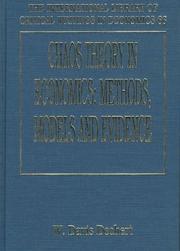 Chaos Theory in EconomicsW. Davis Dechert · 1996
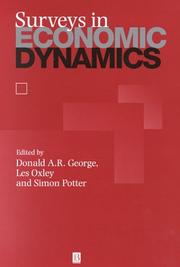 Surveys in economic dynamicsDonald A. R. George, Leslie Oxley · 2000
Ranked by number of editions on Open Library, a rough measure of how lasting a book is.
🔗 Related topics
- Logic simulation Logic simulation is the use of simulation software to predict the behavior of digital circuits and hardware description languages. Simulation can be performed…
- Timing closure Timing closure in VLSI design and electronics engineering is the iterative design process of assuring all signals satisfy the timing requirements in a…
- Statistical static timing analysis Conventional static timing analysis (STA) has been a stock analysis algorithm for the design of digital circuits since the 1960s. However the increased…
- Delay calculation Delay calculation is the term used in integrated circuit design for the calculation of the gate delay of a single logic gate and the wires attached to…
- Clock signal In electronics and especially synchronous digital circuits, a clock signal (historically also known as logic beat) is an electronic logic signal (voltage…
- Physical design (electronics) In integrated circuit design, physical design is a step in the standard design cycle which follows after the circuit design. At this step, circuit representatio…
- Dynamic logic (digital electronics) In integrated circuit design, dynamic logic (or sometimes clocked logic) is a design methodology in combinational logic circuits, particularly those implemented…
- Signoff (electronic design automation) In the automated design of integrated circuits, signoff (also written as sign-off) checks is the collective name given to a series of verification steps…