Everything about Spatial network
Network representing spatial objects

A spatial network is a graph in which the vertices or edges are spatial elements associated with geometric objects, i.e., the nodes are located in a space equipped with a certain metric. The simplest mathematical realization of spatial network is a lattice or a random geometric graph, where nodes are distributed uniformly at random over a two-dimensional plane; a pair of nodes are connected if the Euclidean distance is smaller than a given neighborhood radius. Transportation and mobility networks, Internet, mobile phone networks, power grids, social and contact networks and biological neural networks are all examples where the underlying space is relevant and where the graph's topology alone does not contain all the information. Characterizing and understanding the structure, resilience and the evolution of spatial networks is crucial for many different fields ranging from urbanism to epidemiology. Wikipedia →
🧭 Start here: a 6-step reading path
- Read the overview: Spatial networkA 5-minute orientation
- Skim a recent paper: FSAD-Net: Feedback Spatial Attention Dehazing NetworkInfluential work since 2022
- Pick up a classic book: Graphs and NetworksThe most-reprinted book on the subject
- Read the landmark paper: Spatial Pyramid Pooling in Deep Convolutional Networks for Visual RecognitionCited 10,124 times
- Go sideways: Stochastic geometryA closely related topic
- Go sideways: Stochastic geometry models of wireless networksA closely related topic
📖 Definitions
No dictionary entry for this exact phrase.
🏆 Landmark papers (most cited)
Spatial Pyramid Pooling in Deep Convolutional Networks for Visual Recognition
Spatial Temporal Graph Convolutional Networks for Skeleton-Based Action Recognition
Learning Depth with Convolutional Spatial Propagation Network
Decoding the anatomical network of spatial attention
Spatial prediction on a river network
Spatial network structure and metapopulation persistence
Spatial Network RNN Queries in GIS
Spatial search on a honeycomb network
🆕 Influential since 2022
📚 Books worth reading
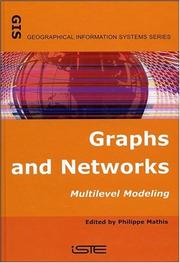 Graphs and NetworksPhilippe Mathis · 2006
 Random networks for communicationMassimo Franceschetti · 2007
 Network developments in economic spatial systemsAura Reggiani, Daniele Fabbri · 1999
 Nomadic and Indigenous SpacesJudith Miggelbrink · 2013
- 📕Exploring Networked Urban MobilitiesMalene Freudendal-Pedersen, Sven Kesselring · 2017
 SPATIAL DYNAMICS, NETWORKS AND MODELLING; ED. BY AURA REGGIANIAura Reggiani, Peter Nijkamp · 2006
 Making strategies in spatial planningMaria Cerreta · 2010
 Using ethnographic dataJean J. Schensul · 1999
Ranked by number of editions on Open Library, a rough measure of how lasting a book is.
🔗 Related topics
- Stochastic geometry In mathematics, stochastic geometry is the study of random spatial patterns. At the heart of the subject lies the study of random point patterns. This…
- Stochastic geometry models of wireless networks In mathematics and telecommunications, stochastic geometry models of wireless networks refer to mathematical models based on stochastic geometry that are…
- Discrete geometry Discrete geometry and combinatorial geometry are branches of geometry that study combinatorial properties and constructive methods of discrete geometric…
- Graph theory In mathematics and computer science, graph theory is the study of graphs, which are mathematical structures used to model pairwise relations between objects…
- Continuum percolation theory In mathematics and probability theory, continuum percolation theory is a branch of mathematics that extends discrete percolation theory to continuous space…
- Dual graph In the mathematical discipline of graph theory, the dual graph of a planar graph G is a graph that has a vertex for each face of G. The dual graph has…
- Spatial network analysis software Spatial network analysis software packages are analytical software used to prepare graph-based analysis of spatial networks. They stem from research fields…
- Random geometric graph In graph theory, a random geometric graph (RGG) is the mathematically simplest spatial network, namely an undirected graph constructed by randomly placing…