Live briefing
Everything about Serial Storage Architecture
Disk drive protocol
Serial Storage Architecture (SSA) was a serial transport protocol used to attach disk drives to server computers. It was developed by IBM employee Ian Judd in 1990 to provide data redundancy for critical applications. SSA was deployed in server RAID environments, where it was capable of providing for up to 80 MB/s of data throughput, with sustained data rates as high as 60 MB/s in non-RAID mode and 35 MB/s in RAID mode. Wikipedia →
🧭 Start here: a 6-step reading path
- Read the overview: Serial Storage ArchitectureA 5-minute orientation
- Skim a recent paper: A Serial–Parallel Mixing-Mode Matrix–Vector Multiplication Architecture for Large-Scale In-Storage Computing With Ultrahigh Parallelism in nand Flash MemoriesInfluential work since 2022
- Pick up a classic book: Upgrading and repairing PCsThe most-reprinted book on the subject
- Read the landmark paper: Two Emerging Serial Storage Interfaces for Supporting Digital Libraries: Serial Storage Architecture (SSA) and Fiber Channel-Arbitrated Loop (FC-AL)Cited 12 times
- Go sideways: SCSIA closely related topic
- Go sideways: Hard disk drive interfaceA closely related topic
📖 Definitions
No dictionary entry for this exact phrase.
🗂️ The subject at a glance
🏆 Landmark papers (most cited)
Two Emerging Serial Storage Interfaces for Supporting Digital Libraries: Serial Storage Architecture (SSA) and Fiber Channel-Arbitrated Loop (FC-AL)
Serial Storage Architecture
🆕 Influential since 2022
📚 Books worth reading
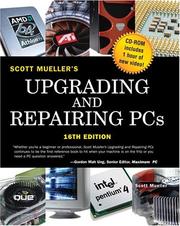 Upgrading and repairing PCsScott Mueller, Mark Edward Soper · 1988
 The web application hacker's handbookDafydd Stuttard, Marcus Pinto · 2007
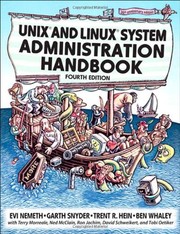 Unix System Administration HandbookEvi Nemeth, Garth Snyder · 1989
 Microprocessor Architecture, Programming, and Applications with the 8085Ramesh S. Gaonkar · 1996
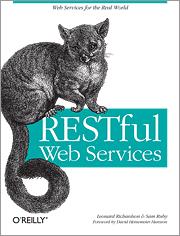 RESTful Web ServicesLeonard Richardson, Sam Ruby · 2007
 Digital systems testing and testable designMiron Abramovici · 1990
 Linked dataTom Heath · 2011
 Writing OS/2 Warp Device Drivers in CSteven J. Mastrianni · 1997
Ranked by number of editions on Open Library, a rough measure of how lasting a book is.
🔗 Related topics
- SCSI Small Computer System Interface (SCSI, /ˈskʌzi/ SKUZ-ee) is a set of standards for physically connecting and transferring data between computers and peripheral…
- Hard disk drive interface Hard disk drives are accessed over one of a number of bus types, including parallel ATA (PATA, also called IDE or EIDE; described before the introduction…
- SCSI connector A SCSI connector (/ˈskʌzi/ SKUZ-ee) is used to connect computer parts that communicate with each other via the SCSI standard. Generally, two connectors…
- Storage area network A storage area network (SAN) or storage network is a computer network which provides access to consolidated, block-level data storage. SANs are primarily…
- ISCSI Internet Small Computer Systems Interface (iSCSI; /aɪˈskʌzi/ eye-SKUZ-ee) is an Internet Protocol-based storage networking standard for linking data storage…
- Parallel SCSI Parallel SCSI (formally, SCSI Parallel Interface, or SPI) is the earliest of the interface implementations in the SCSI family. SPI is a parallel bus; there…
- Disk enclosure A disk enclosure or desktop hard drive is a specialized casing designed to hold and power hard disk drives or solid-state drives while providing a mechanism…
- SATA SATA (Serial AT Attachment) is a computer bus interface announced in 2000 that connects host bus adapters to mass storage devices such as hard disk drives…