Everything about Sequence step algorithm
Computer Algorithm
A sequence step algorithm (SQS-AL) is an algorithm implemented in a discrete event simulation system to maximize resource utilization. This is achieved by running through two main nested loops: A sequence step loop and a replication loop. For each sequence step, each replication loop is a simulation run that collects crew idle time for activities in that sequence step. The collected crew idle times are then used to determine resource arrival dates for user-specified confidence levels. The process of collecting the crew idle times and determining crew arrival times for activities on a considered sequence step is repeated from the first to the last sequence step. Wikipedia →
🧭 Start here: a 6-step reading path
- Read the overview: Sequence step algorithmA 5-minute orientation
- Skim a recent paper: Multi-sequence discrete recursive descent optimizer: a novel optimization algorithm based on quasi-Newton directions and imprecise search step lengthsInfluential work since 2022
- Pick up a classic book: Software EngineeringThe most-reprinted book on the subject
- Read the landmark paper: Two-Step Trajectory Spoofing Algorithm for Loosely Coupled GNSS/IMU and NIS Sequence DetectionCited 21 times
- Go sideways: Linear scheduling methodA closely related topic
- Go sideways: Bayesian optimizationA closely related topic
📖 Definitions
No dictionary entry for this exact phrase.
🗂️ The subject at a glance
No outline available.
🏆 Landmark papers (most cited)
Two-Step Trajectory Spoofing Algorithm for Loosely Coupled GNSS/IMU and NIS Sequence Detection
An efficient m-step lookahead rollout algorithm for profit-oriented selective disassembly sequence planning with operation stochastic failure
Multi‐step air quality index forecasting via data preprocessing, sequence reconstruction, and improved multi‐objective optimization algorithm
The Binormalized Data-Reusing LMS Algorithm with Optimized Step-Size Sequence
Optimal distributed fusion algorithm with one-step out-of-sequence estimates
🆕 Influential since 2022
📚 Books worth reading
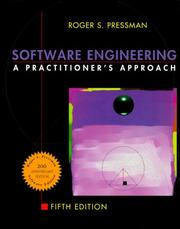 Software EngineeringRoger S. Pressman, Bruce Maxim · 1982
 Computational Thinking for the Modern Problem SolverKenny A. Hunt, David D. Riley · 2014
 The mathematics of Paul ErdösRonald L. Graham, Jaroslav Nešetřil · 1997
 Principles of gene manipulation and genomicsS. B. Primrose · 2006
 Sequences and their ApplicationsC. Ding · 1999
 DSP for MATLAB and LabVIEWForester W. Isen · 2008
 Introduction to Programming with C++Diane Zak · 2011
 Foundations of computer scienceBehrouz A. Forouzan · 2002
Ranked by number of editions on Open Library, a rough measure of how lasting a book is.
🔗 Related topics
- Linear scheduling method Linear scheduling method (LSM) is a graphical scheduling method focusing on continuous resource utilization in repetitive activities. LSM is used mainly…
- Bayesian optimization Bayesian optimization is a sequential model-based strategy for global optimization of black-box objective functions whose evaluations are costly. It is…
- Probabilistic numerics Probabilistic numerics is an active field of study at the intersection of applied mathematics, statistics, and machine learning centering on the concept…
- Optimal computing budget allocation In Computer Science, Optimal Computing Budget Allocation (OCBA) is a simulation optimization method designed to maximize the Probability of Correct Selection…
- Monte Carlo method Monte Carlo methods, also called the Monte Carlo experiments or Monte Carlo simulations, are a broad class of computational algorithms based on repeated…
- Ant colony optimization algorithms In computer science and operations research, the ant colony optimization algorithm (ACO) is a probabilistic technique for solving computational problems…
- Probabilistic context-free grammar In theoretical linguistics and computational linguistics, probabilistic context free grammars (PCFGs) extend context-free grammars, similar to how hidden…
- Count-distinct problem In computer science, the count-distinct problem (also known in applied mathematics as the cardinality estimation problem) is the problem of finding the…