Everything about Semiconductor
Material of moderate electrical conductivity
A semiconductor is a material with electrical conductivity between that of a conductor and an insulator. Its conductivity can be modified by adding impurities ("doping") to its crystal structure. When two regions with different doping levels are present in the same crystal, they form a semiconductor junction. The term "semiconductors" is sometimes used to refer to semiconductor devices such as microchips and computer processors, which work using the physical properties of semiconductors. Wikipedia →
🧭 Start here: a 6-step reading path
- Read the overview: SemiconductorA 5-minute orientation
- Skim a recent paper: Semiconductor spin qubitsInfluential work since 2022
- Pick up a classic book: Physics for Computer Science StudentsThe most-reprinted book on the subject
- Read the landmark paper: Electrochemical Photolysis of Water at a Semiconductor ElectrodeCited 32,757 times
- Go sideways: Extrinsic semiconductorA closely related topic
- Go sideways: Doping (semiconductor)A closely related topic
📖 Definitions
Noun A substance with electrical properties intermediate between a good conductor and a good insulator.
Noun Ellipsis of semiconductor device.
🗂️ The subject at a glance
🏆 Landmark papers (most cited)
Electrochemical Photolysis of Water at a Semiconductor Electrode
Ab initio molecular-dynamics simulation of the liquid-metal–amorphous-semiconductor transition in germanium
Environmental Applications of Semiconductor Photocatalysis
Atomically Thin MoS 2 : A New Direct-Gap Semiconductor
Semiconductor Clusters, Nanocrystals, and Quantum Dots
Synthesis and characterization of nearly monodisperse CdE (E = sulfur, selenium, tellurium) semiconductor nanocrystallites
Semiconductor Nanocrystals as Fluorescent Biological Labels
Semiconductor-based Photocatalytic Hydrogen Generation
🆕 Influential since 2022
Semiconductor spin qubits
Ultra-wide bandgap semiconductor Ga2O3 power diodes
Approaching the quantum limit in two-dimensional semiconductor contacts
Recent advances in semiconductor heterojunctions: a detailed review of the fundamentals of photocatalysis, charge transfer mechanism and materials
Semiconductor moiré materials
📚 Books worth reading
 Physics for Computer Science StudentsNarciso Garcia, Arthur Damask · 1986
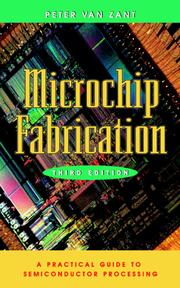 Microchip fabricationPeter Van Zant · 1984
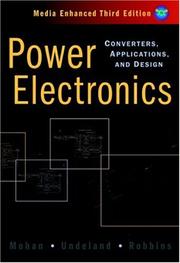 Power electronicsNed Mohan, William Robbins · 1989
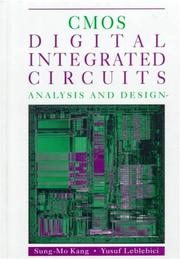 CMOS digital integrated circuitsSung-Mo Kang, Yusuf Leblebici · 1995
 Applied solid state scienceRaymond Wolfe · 1969
 Physics of Semiconductor DevicesSimon M. Sze, Kwok K. Ng · 1981
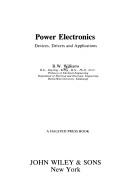 Power electronicsB. W. Williams · 1987
 SemiconductorsR. A. Smith · 1959
Ranked by number of editions on Open Library, a rough measure of how lasting a book is.
🔗 Related topics
- Extrinsic semiconductor An extrinsic semiconductor is one that has been doped; during manufacture of the semiconductor crystal a trace element or chemical called a doping agent…
- Doping (semiconductor) In semiconductor production, doping is the intentional introduction of impurities into an intrinsic (undoped) semiconductor for the purpose of modulating…
- Semiconductor device A semiconductor device is an electronic component that relies on the electronic properties of a semiconductor material (e.g., silicon, germanium, gallium…
- Band gap In solid-state physics and solid-state chemistry, a band gap, also called a bandgap or energy gap, is an energy range in a solid where no electronic states…
- Charge carrier In solid state physics, a charge carrier is a particle or quasiparticle that is free to move, carrying an electric charge, especially the particles that…
- Intrinsic semiconductor An intrinsic semiconductor, also called a pure semiconductor, undoped semiconductor or i-type semiconductor, is a semiconductor without any significant…
- Outline of semiconductors The following outline is provided as an overview of and topical guide to semiconductors: Semiconductor – material whose electrical conductivity lies between…
- Semimetal A semimetal is a material with a small energy overlap between the bottom of the conduction band and the top of the valence band, but they do not overlap…