Everything about Semi-structured data
Data organized by tags but not tables
Semi-structured data is a form of structured data that is not rigidly structured. The data model associated with semi-structured data is interpreted when the data is read from a data storage medium or accessed in memory. The data model need not conform to a predefined database schema and is not optimized for succinct, low-overhead streaming or persistent storage as is normal with a relational database, graph database, data table, or graph. Instead, semi-structured data includes delimiter characters or tags to separate semantic elements or to describe relationships among records and fields within the data. The data is said to have a self-describing structure. Wikipedia →
🧭 Start here: a 6-step reading path
- Read the overview: Semi-structured dataA 5-minute orientation
- Skim a recent paper: Declarative RDF graph generation from heterogeneous (semi-)structured data: A systematic literature reviewInfluential work since 2022
- Pick up a classic book: Neural Information ProcessingThe most-reprinted book on the subject
- Read the landmark paper: Collecting data using a semi‐structured interview: a discussion paperCited 839 times
- Go sideways: Knowledge extractionA closely related topic
- Go sideways: MarkLogic ServerA closely related topic
📖 Definitions
No dictionary entry for this exact phrase.
🏆 Landmark papers (most cited)
Collecting data using a semi‐structured interview: a discussion paper
A markov prediction model for data-driven semi-structured business processes
Ontology-Based Conceptual Design of ETL Processes for Both Structured and Semi-Structured Data
Building Semantic Knowledge Graphs from (Semi-)Structured Data: A Review
Autism spectrum disorder detection from semi-structured and unstructured medical data
FlashRelate: extracting relational data from semi-structured spreadsheets using examples
Extracting lists of data records from semi-structured web pages
Discovering OLAP dimensions in semi-structured data
🆕 Influential since 2022
Declarative RDF graph generation from heterogeneous (semi-)structured data: A systematic literature review
A Survey on Mapping Semi-Structured Data and Graph Data to Relational Data
Large Language Models for Structured and Semi-Structured Data, Recommender Systems and Knowledge Base Engineering: A Survey of Recent Techniques and Architectures
Quantitizing Qualitative Data from Semi-Structured Interviews: A Methodological Contribution in the Context of Public Policy Decision-Making
Hybrid CNN-SVM Classifier Approaches to Process Semi-Structured Data in Sugarcane Yield Forecasting Production
📚 Books worth reading
 Neural Information ProcessingTingwen Huang · 2012
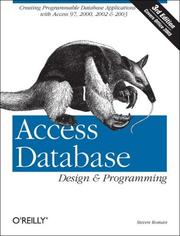 Access database design & programmingSteven Roman · 1997
 Research methods for business studentsMark Saunders, Mark Saunders · 2006
 Web data managementSerge Abiteboul · 2011
 Semantic Web and Web ScienceJuanzi Li · 2013
 Bioinformatics for glycobiology and glycomicsClaus-Wilhelm von der Lieth · 2009
 Discovery ScienceJean-Gabriel Ganascia · 2012
 Serverless Analytics with Amazon AthenaAnthony Virtuoso, Mert Turkay Hocanin · 2021
Ranked by number of editions on Open Library, a rough measure of how lasting a book is.
🔗 Related topics
- Knowledge extraction Knowledge extraction is the creation of knowledge from structured (relational databases, XML) and unstructured (text, documents, images) sources. The resulting…
- MarkLogic Server MarkLogic Server is a document-oriented database developed by MarkLogic. It is a NoSQL multi-model database that evolved from an XML database to natively…
- XML database An XML database is a data persistence software system that allows data to be specified, and stored, in XML format. This data can be queried, transformed…
- XQuery XQuery (XML Query) is a query language and functional programming language designed to query and transform collections of structured and unstructured data…
- ER/Studio ER/Studio is data architecture and data modeling software developed by IDERA, Inc. ER/Studio is compatible with multiple database platforms and is used…
- JSONiq JSONiq is a query and functional programming language that is designed to declaratively query and transform collections of hierarchical and heterogeneous…
- Data exchange Data exchange is the process of moving data from one information system to another. It often involves transforming data that is native to the source system…
- Outline of databases The following is provided as an overview of and topical guide to databases: Database – organized collection of data, today typically in digital form. The…