Live briefing
Everything about Self-reference effect
Psychological model
The self-reference effect is a tendency for people to encode information differently depending on whether they are implicated in the information. When people are asked to remember information when it is related in some way to themselves, the recall rate can be improved. Wikipedia →
🧭 Start here: a 6-step reading path
- Read the overview: Self-reference effectA 5-minute orientation
- Skim a recent paper: The effect of social media environments on online emotional disclosure: tie strength, network size and self-referenceInfluential work since 2022
- Pick up a classic book: The care and feeding of your brainThe most-reprinted book on the subject
- Read the landmark paper: The self-reference effect in memory: A meta-analysis.Cited 1,102 times
- Go sideways: Self-referential encodingA closely related topic
- Go sideways: Levels of processing modelA closely related topic
📖 Definitions
Noun The tendency of a person to recall information more readily if it pertains to the self
🏆 Landmark papers (most cited)
The self-reference effect in memory: A meta-analysis.
Elaboration, organization, and the self-reference effect in memory.
Self, Memory, and the Self-Reference Effect
Ageing and the self-reference effect in memory
The Self-Reference Effect on Memory in Early Childhood
Medial PFC Damage Abolishes the Self-reference Effect
An experimental study on the self-reference effect
Electrophysiological Correlation of the Degree of Self-Reference Effect
🆕 Influential since 2022
The effect of social media environments on online emotional disclosure: tie strength, network size and self-reference
Is self always prioritised? Attenuating the ownership self-reference effect in memory
Loneliness is associated with a greater self‐reference effect in episodic memory when compared against a close friend
Influence of acculturation and cultural values on the self-reference effect
The Self-reference Effect Can Modulate Language Syntactic Processing Even Without Explicit Awareness: An Electroencephalography Study
📚 Books worth reading
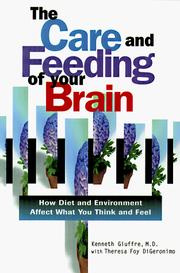 The care and feeding of your brainKenneth Giuffré · 1999
- 📕Mozart Effect, The (Nova Audio Books)Don Campbell · 1997
Ranked by number of editions on Open Library, a rough measure of how lasting a book is.
🔗 Related topics
- Self-referential encoding Self-referential encoding is a method of organizing information in one's memory in which one interprets incoming information in relation to oneself, using…
- Levels of processing model The levels of processing model, created by Fergus I. M. Craik and Robert S. Lockhart in 1972, describes memory recall of stimuli as a function of the depth…
- Mere ownership effect The mere ownership effect is the observation that people who own a good tend to evaluate it more positively than people who do not. It is typically demonstrated…
- Encoding (memory) Memory has the ability to encode, store and recall information. Memories give an organism the capability to learn and adapt from previous experiences as…
- Dorsomedial prefrontal cortex The dorsomedial prefrontal cortex (dmPFC or DMPFC is a section of the prefrontal cortex in some species' brain anatomy. It includes portions of Brodmann…
- Prefrontal cortex The prefrontal cortex (PFC) is the anterior part of the cerebral cortex of each frontal lobe of the mammalian brain. It is the association cortex in the…
- Autobiographical memory Autobiographical memory (AM) is a memory system consisting of episodes recollected from an individual's life, based on a combination of episodic (personal…
- Precuneus In neuroanatomy, the precuneus is the portion of the superior parietal lobule on the medial surface of each brain hemisphere. It is located in front of…