Everything about Scientific method
Interplay between observation, experiment, and theory in science
The scientific method is an empirical method for acquiring knowledge through careful observation, rigorous skepticism, hypothesis testing, and experimental validation. Developed from ancient and medieval practices, it acknowledges that cognitive assumptions can distort the interpretation of the observation. The scientific method has characterized science since at least the 17th century. Scientific inquiry includes creating a testable hypothesis through inductive reasoning, testing it through experiments and statistical analysis, and adjusting or discarding the hypothesis based on the results. Wikipedia →
🧭 Start here: a 6-step reading path
- Read the overview: Scientific methodA 5-minute orientation
- Skim a recent paper: Uncertainty quantification in scientific machine learning: Methods, metrics, and comparisonsInfluential work since 2022
- Pick up a classic book: Against MethodThe most-reprinted book on the subject
- Read the landmark paper: Marketing, Scientific Progress, and Scientific MethodCited 559 times
- Go sideways: Hypothetico-deductive modelA closely related topic
- Go sideways: Models of scientific inquiryA closely related topic
📖 Definitions
Noun A method of discovering knowledge about the natural world based in making falsifiable predictions (hypotheses), testing them empirically, and developing theories that match known data from repeatable physical experimentation.
🏆 Landmark papers (most cited)
Marketing, Scientific Progress, and Scientific Method
Design method and scientific method
On Scientific Method
THE SCIENTIFIC METHOD
The scientific method.
Scientific Method Questioned
Scientific Method
The Scientific Method
🆕 Influential since 2022
Uncertainty quantification in scientific machine learning: Methods, metrics, and comparisons
A Scientific Method for Startups
Weaving Indigenous knowledge into the scientific method
Redefining the scientific method: As the use of sophisticated scientific methods that extend our mind
Science and Scientific Method
📚 Books worth reading
 Against MethodPaul K. Feyerabend · 1975
- 📕Scientific Status of PsychoanalysisPushpa Misra · 2016
 Anthropic BiasNick Bostrom · 2002
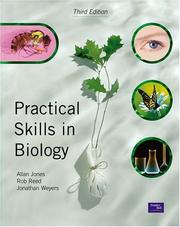 Practical skills in biologyA. M. Jones, Allan Jones · 1994
- 📕Principles, Approaches and Issues in Participant ObservationDanny L. Jorgensen · 2020
- 📕Observational Method in Civil EngineeringAlan Powderham, Anthony O'Brien · 2020
- 📕A three-dimensional simulation method for the prediction of movements in pole vaultingOrly Nicklass · 1987
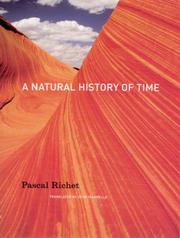 A natural history of timePascal Richet · 2007
Ranked by number of editions on Open Library, a rough measure of how lasting a book is.
🔗 Related topics
- Hypothetico-deductive model The hypothetico-deductive model or method is a proposed description of the scientific method. According to it, scientific inquiry proceeds by formulating…
- Models of scientific inquiry Models of scientific inquiry have two functions: first, to provide a descriptive account of how scientific inquiry is carried out in practice, and second…
- Outline of scientific method The following outline is provided as an overview of and topical guide to the scientific method: Scientific method – body of techniques for investigating…
- Hypothesis A hypothesis (pl.: hypotheses) is a proposed explanation for a phenomenon. A scientific hypothesis must be based on observations and make a testable and…
- Outline of science The following outline is provided as a topical overview of science: Science is the systematic discipline that builds and organises knowledge in the form…
- Experimentum crucis In science, an experimentum crucis (English: crucial experiment or critical experiment) is an experiment capable of decisively determining whether or not…
- Falsifiability Falsifiability is a standard of evaluation of scientific statements, including theories and hypotheses. A statement is falsifiable if it belongs to a language…
- Scientific evidence Scientific evidence is evidence that serves to either support or counter a scientific theory or hypothesis, although scientists also use evidence in other…