Live briefing
Everything about Run-length encoding
Form of lossless data compression
Run-length encoding (RLE) is a form of lossless data compression in which runs of data are stored as a single occurrence of that data value and a count of its consecutive occurrences, rather than as the original run. For example, a sequence of "green green green green green" in an image built up from colored dots could be shortened to "green x 5". Wikipedia →
🧭 Start here: a 6-step reading path
- Read the overview: Run-length encodingA 5-minute orientation
- Skim a recent paper: ECG Data Compression Using Modified Run Length Encoding of Wavelet Coefficients for Holter MonitoringInfluential work since 2022
- Pick up a classic book: Computational Thinking for the Modern Problem SolverThe most-reprinted book on the subject
- Read the landmark paper: Efficient N-Dimensional surface estimation using Crofton formula and run-length encodingCited 55 times
- Go sideways: PCXA closely related topic
- Go sideways: BMP file formatA closely related topic
📖 Definitions
Noun A simple data compression scheme in which sequences of the same item are replaced by one such item and a count (so for example the text BBBBB is stored as a single B with count of 5).
🗂️ The subject at a glance
🏆 Landmark papers (most cited)
Efficient N-Dimensional surface estimation using Crofton formula and run-length encoding
A Novel Linguistic Steganography Based on Synonym Run-Length Encoding
RLH: Bitmap compression technique based on run-length and Huffman encoding
Optimizing a scheme for run length encoding
Hough Transform Run Length Encoding for Real-Time Image Processing
An Adaptive Run Length Encoding method for the compression of electrocardiograms
Detecting fingerprint minutiae by run length encoding scheme
Directional difference chain codes with quasi-lossless compression and run-length encoding
🆕 Influential since 2022
ECG Data Compression Using Modified Run Length Encoding of Wavelet Coefficients for Holter Monitoring
Run length encoding based weld seam detection from point clouds of ship stiffened panel
Improving Performance of Virtual Machine Covert Timing Channel Through Optimized Run-Length Encoding
Combining 3D run-length encoding coding and searching techniques for medical image compression
Load Flow Calculation For Electrical Power System Based On Run Length Encoding Algorithm
📚 Books worth reading
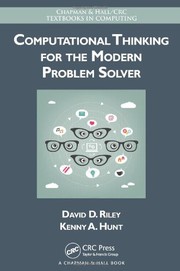 Computational Thinking for the Modern Problem SolverKenny A. Hunt, David D. Riley · 2014
 Data structures and algorithms in JavaAdam Drozdek · 2001
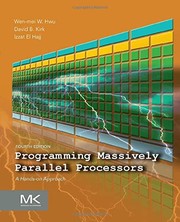 Programming Massively Parallel ProcessorsDavid Kirk, Wen-Mei W. Hwu · 2010
 Raspberry Pi CookbookSimon Monk · 2014
- 📕Solving Some Sequence Problems on Run-Length Encoded StringsJia-Jie Liu Y. L. Wang G. S. Huang · 2008
 Data Structures and Algorithms in C++Adam Drozdek · 2000
- 📕Revise Edexcel GCSE Computer Science Revision WorkbookDavid Waller · 2017
 AQA Computer ScienceSteve Cushing · 2016
Ranked by number of editions on Open Library, a rough measure of how lasting a book is.
🔗 Related topics
- PCX PCX, standing for PiCture eXchange, is an image file format developed by the now-defunct ZSoft Corporation of Marietta, Georgia, United States. It was…
- BMP file format The BMP file format (also known as bitmap image file) the Windows Bitmap file format, or simply bitmap, is a raster graphics image file format used to…
- Bzip2 bzip2 is a file format and a file compression program. The program uses the Burrows–Wheeler algorithm to compress and decompress a single file using the…
- Modified Huffman coding Modified Huffman coding is used in fax machines to encode black-on-white images (bitmaps). It combines the variable-length codes of Huffman coding with…
- Lossless compression Lossless compression is a class of data compression that allows the original data to be perfectly reconstructed from the compressed data with no loss of…
- JBIG2 JBIG2 is an image compression standard for bi-level images, developed by the Joint Bi-level Image Experts Group. It is suitable for both lossless and lossy…
- Sixel Sixel, short for "six pixels", is a bitmap graphics format supported by terminals and printers from DEC. It consists of a pattern six pixels high and one…
- Lempel–Ziv–Welch Lempel–Ziv–Welch (LZW) is a universal lossless compression algorithm created by Abraham Lempel, Jacob Ziv, and Terry Welch. It was published by Welch in…