Everything about Run queue
Data structure of processes waiting for CPU time
In modern computers many processes run at once. Active processes are placed in an array called a run queue, or runqueue. The run queue may contain priority values for each process, which will be used by the scheduler to determine which process to run next. To ensure each program has a fair share of resources, each one is run for some time period (quantum) before it is paused and placed back into the run queue. When a program is stopped to let another run, the program with the highest priority in the run queue is then allowed to execute. Wikipedia →
🧭 Start here: a 6-step reading path
- Read the overview: Run queueA 5-minute orientation
- Pick up a classic book: What Money Can't BuyThe most-reprinted book on the subject
- Read the landmark paper: Single Run Optimization of Discrete Event Simulations—An Empirical Study Using the M/M/l QueueCited 63 times
- Go sideways: O(1) schedulerA closely related topic
- Go sideways: Scheduling (computing)A closely related topic
📖 Definitions
No dictionary entry for this exact phrase.
🗂️ The subject at a glance
No outline available.
🏆 Landmark papers (most cited)
📚 Books worth reading
 What Money Can't BuyMichael J. Sandel · 2011
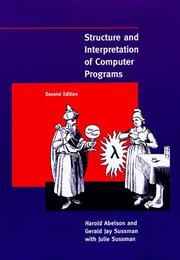 Structure and Interpretation of Computer Programs (SICP)Harold Abelson, Gerald Jay Sussman · 1985
 Introduction to operations researchFrederick S. Hillier · 1967
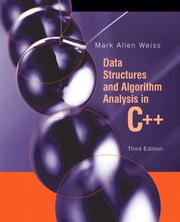 Data structures and algorithm analysis in CMark Allen Weiss · 1993
 Starting Out with JavaTony Gaddis · 2004
 Introduction to Computing Using PythonLjubomir Perkovic · 2011
 Data structures & algorithm analysis in JavaMark Allen Weiss · 1999
 Fundamentals of data structures in CEllis Horowitz · 1993
Ranked by number of editions on Open Library, a rough measure of how lasting a book is.
🔗 Related topics
- O(1) scheduler An O(1) scheduler (pronounced "O of 1 scheduler", "Big O of 1 scheduler", or "constant time scheduler") using the terminology from Big O notation in algorithm…
- Scheduling (computing) In computing, scheduling is the action of assigning resources to perform tasks. The resources may be processors, network links or expansion cards. The…
- Load (computing) In UNIX computing, the system load is a measure of the amount of computational work that a computer system performs. The load average represents the average…
- Preemption (computing) In computing, preemption is the act performed by an external scheduler — without assistance or cooperation from the task — of temporarily interrupting…
- Process management (computing) A process is a program in execution, and an integral part of any modern-day operating system (OS). The OS must allocate resources to processes, enable…
- Process (computing) In computing, a process is the instance of a computer program that is being executed by one or many threads. There are many different process models, some…
- Process state In a multitasking computer system, processes may occupy a variety of states. These distinct states may not be recognized as such by the operating system…
- Completely Fair Scheduler The Completely Fair Scheduler (CFS) was a process scheduler that was merged into the 2.6.23 (October 2007) release of the Linux kernel. It was the default…