Everything about Rubella
Human viral disease

Rubella, also known as German measles or three-day measles, is a vaccine-preventable infection caused by the rubella virus. Symptoms of the disease are often mild, sometimes inapparent. A rash may appear around two weeks after exposure and last for three days, usually starting on the face then spreading to the rest of the body. The rash is sometimes itchy and is not as bright as that of measles. Swollen lymph nodes are common and may last a few weeks. A fever, sore throat, and fatigue may also occur. Joint pain is common in adults. Complications may include bleeding problems, testicular swelling, encephalitis, and inflammation of nerves. Infection during early pregnancy may result in a miscarriage or a child born with congenital rubella syndrome (CRS). Symptoms of CRS manifest as problems with the eyes such as cataracts, deafness, as well as affecting the heart and brain. Problems are rare after the 20th week of pregnancy. Wikipedia →
🧭 Start here: a 6-step reading path
- Read the overview: RubellaA 5-minute orientation
- Skim a recent paper: RubellaInfluential work since 2022
- Pick up a classic book: The vaccine raceThe most-reprinted book on the subject
- Read the landmark paper: Autism and measles, mumps, and rubella vaccine: no epidemiological evidence for a causal associationCited 547 times
- Go sideways: Congenital rubella syndromeA closely related topic
- Go sideways: MMR vaccineA closely related topic
📖 Definitions
Noun A mild disease caused by the Rubella virus infecting the respiratory tract, and characterised by a rash of pink dots, fever and swollen lymph nodes.
🗂️ The subject at a glance
🏆 Landmark papers (most cited)
Autism and measles, mumps, and rubella vaccine: no epidemiological evidence for a causal association
A Population-Based Study of Measles, Mumps, and Rubella Vaccination and Autism
Defectiveness of Interferon Production and of Rubella Virus Interference in a Line of African Green Monkey Kidney Cells (Vero)
CONSEQUENCES OF CONFIRMED MATERNAL RUBELLA AT SUCCESSIVE STAGES OF PREGNANCY
The Capsella rubella genome and the genomic consequences of rapid mating system evolution
Autism in children with congenital rubella
Gregg's rubella legacy 1941–1991
Persistence of Measles, Mumps, and Rubella Antibodies in an MMR‐Vaccinated Cohort: A 20‐Year Follow‐up
🆕 Influential since 2022
Rubella
A measles and rubella vaccine microneedle patch in The Gambia: a phase 1/2, double-blind, double-dummy, randomised, active-controlled, age de-escalation trial
Adina Rubella‐Like Microsized SiO@N‐Doped Carbon Grafted with N‐Doped Carbon Nanotubes as Anodes for High‐Performance Lithium Storage
Parental Vaccine Hesitancy and Association With Childhood Diphtheria, Tetanus Toxoid, and Acellular Pertussis; Measles, Mumps, and Rubella; Rotavirus; and Combined 7-Series Vaccination
Progress Toward Rubella and Congenital Rubella Syndrome Control and Elimination — Worldwide, 2012–2020
📚 Books worth reading
 The vaccine raceMeredith Wadman · 2017
- 📕Adverse Effects of Pertussis and Rubella VaccinesInstitute of Medicine, Committee to Review the Adverse Consequences of Pertussis and RubellaVaccines · 1991
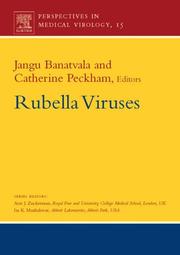 Rubella virusesCatherine Peckham · 2006
 Everything You Need to Know About Measles and RubellaTrisha Hawkins · 2000
- 📕Problem definition studyCenter for Devices and Radiological Health (U.S.). Office of Device Evaluation. Division of Clinical Laboratory Devices · 1985
- 📕Rubella in pregnancyKenneth J. Bart · 1985
- 📕World Without WordsDavid Goode · 2010
- 📕Acute ExanthemeTheodor von Jürgensen · 1896
Ranked by number of editions on Open Library, a rough measure of how lasting a book is.
🔗 Related topics
- Congenital rubella syndrome Congenital rubella syndrome (CRS) occurs when a human fetus is infected with the rubella virus (German measles) via maternal-fetal transmission and develops…
- MMR vaccine The MMR vaccine (abbreviated as MMR) is a combination vaccine against measles, mumps, and rubella (German measles). It contains the combined measles vaccine…
- Measles Measles is a highly contagious, vaccine-preventable infectious disease caused by the measles virus. Other names include morbilli, rubeola, 9-day measles…
- 1962–1965 rubella epidemic The 1962–1965 rubella epidemic was an outbreak of rubella across Europe and the United States. The rubella virus, also known as the German measles, is…
- Rubella vaccine Rubella vaccine is a vaccine used to prevent rubella. Effectiveness begins about two weeks after a single dose and around 95% of people become immune.…
- Measles vaccine Measles vaccine is a live attenuated vaccine that protects against becoming infected with measles. Nearly all of those who do not develop immunity after…
- Mumps Mumps is a highly contagious, vaccine-preventable viral disease caused by the mumps virus. Initial symptoms of mumps are non-specific and include fever…
- MMRV vaccine The MMRV vaccine is a combination vaccine against measles, mumps, rubella (German measles), and varicella (chickenpox). It contains the combined measles…