Everything about Rocket
Vehicle propelled by ejection of gases

A rocket is an elongated flying vehicle that uses a rocket engine to accelerate without using any surrounding air. A rocket engine produces thrust by reaction to exhaust expelled at high speed. Unlike jet engines, rockets are fuelled entirely by propellant which they carry, without the need for oxygen from air; consequently a rocket can fly in the vacuum of space, and indeed rocket engines operate more efficiently outside the atmosphere. Wikipedia →
🧭 Start here: a 6-step reading path
- Read the overview: RocketA 5-minute orientation
- Skim a recent paper: Impact of Rocket Launch and Space Debris Air Pollutant Emissions on Stratospheric Ozone and Global ClimateInfluential work since 2022
- Pick up a classic book: Jane's All the Worlds AircraftThe most-reprinted book on the subject
- Read the landmark paper: ROCKET: exceptionally fast and accurate time series classification using random convolutional kernelsCited 1,046 times
- Go sideways: Rocket engineA closely related topic
- Go sideways: Specific impulseA closely related topic
📖 Definitions
Noun A projectile. A cylindrical projectile that can be fired to a great height through combustion, a type of firework of this form, typically exploding with light and colour; a skyrocket. A blunt lance head used in jousting. A long vehicle or craft propelled by a rocket engine; a missile or rocket-propelled spacecraft. An engine operating similarly to the pyrotechnic, generating thrust by the expulsion of hot gases; a rocket engine.
Noun A cylindrical projectile that can be fired to a great height through combustion, a type of firework of this form, typically exploding with light and colour; a skyrocket.
Noun A blunt lance head used in jousting.
Noun A long vehicle or craft propelled by a rocket engine; a missile or rocket-propelled spacecraft.
🗂️ The subject at a glance
🏆 Landmark papers (most cited)
ROCKET: exceptionally fast and accurate time series classification using random convolutional kernels
Hydrogen fuel rocket engines simulation using LOGOS code
Surrogate Mixtures to Represent Complex Aviation and Rocket Fuels
Microbial perchlorate reduction: rocket-fuelled metabolism
Rotating detonation combustors and their similarities to rocket instabilities
A physics-based approach to modeling real-fuel combustion chemistry – II. Reaction kinetic models of jet and rocket fuels
Identification, FT-IR, NMR (1H and 13C) and GC/MS studies of fatty acid methyl esters in biodiesel from rocket seed oil
Rivaroxaban—Once daily, oral, direct factor Xa inhibition Compared with vitamin K antagonism for prevention of stroke and Embolism Trial in Atrial Fibrillation: Rationale and Design of the ROCKET AF study
🆕 Influential since 2022
Impact of Rocket Launch and Space Debris Air Pollutant Emissions on Stratospheric Ozone and Global Climate
Data-driven deep learning approach for thrust prediction of solid rocket motors
Multimodal optical excitation pulsed thermography: Enhanced recognize debonding defects of the solid propellant rocket motor cladding layer
A multi-head attention network with adaptive meta-transfer learning for RUL prediction of rocket engines
Space Flight Demonstration of Rotating Detonation Engine Using Sounding Rocket S-520-31
📚 Books worth reading
 Jane's All the Worlds AircraftFred T. Jane · 1933
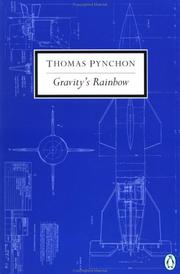 Gravity's RainbowThomas Pynchon · 1973
 How to build a fizzy rocketLori Shores · 2010
 Interplanetary FlightArthur C. Clarke · 1950
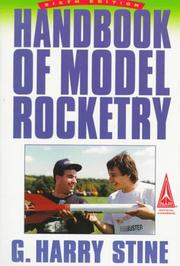 Handbook of model rocketryG. Harry Stine · 1965
 Rocket propulsion elementsGeorge Paul Sutton · 1949
 Roaring rocketsTony Mitton, Ant Parker · 1997
 Rocket boysHomer H. Hickam · 1998
Ranked by number of editions on Open Library, a rough measure of how lasting a book is.
🔗 Related topics
- Rocket engine A rocket engine is a reaction engine, producing thrust in accordance with Newton's third law by ejecting reaction mass rearward, usually a high-speed jet…
- Specific impulse Specific impulse (usually abbreviated as Isp) is a physical quantity defined as the ratio of change in momentum (impulse) to the mass used, usually fuel…
- Rocket propellant Rocket propellant is used as a reaction mass ejected from a rocket engine to produce thrust. The energy required can either come from the propellants themselves…
- Rocket engine nozzle A rocket engine nozzle is a propelling nozzle (usually of the de Laval type) used in a rocket engine to expand and accelerate combustion products to high…
- Solid-propellant rocket A solid-propellant rocket or solid rocket is a rocket with a rocket engine that uses solid propellants (fuel/oxidizer). The earliest rockets were solid-fuel…
- Propellant A propellant (or propellent) is a mass that is expelled or expanded in such a way as to create a thrust or another motive force in accordance with Newton's…
- Liquid-propellant rocket A liquid-propellant rocket or liquid rocket uses a rocket engine burning liquid propellants. (Alternate approaches use gaseous or solid propellants.) Liquids…
- Delta-v Delta-v (also known as "change in velocity"), symbolized as Δv and pronounced /dɛltə viː/, as used in spacecraft flight dynamics, is a measure of the impulse…