Everything about Robust statistics
Type of statistics
Robust statistics are statistics that maintain their properties even if the underlying distributional assumptions are incorrect. Robust statistical methods have been developed for many common problems, such as estimating location, scale, and regression parameters. One motivation is to produce statistical methods that are not unduly affected by outliers. Another motivation is to provide methods with good performance when there are small departures from a parametric distribution. For example, robust methods work well for mixtures of two normal distributions with different standard deviations; under this model, non-robust methods like a t-test work poorly. Wikipedia →
🧭 Start here: a 6-step reading path
- Read the overview: Robust statisticsA 5-minute orientation
- Skim a recent paper: Causal Learning for Robust Specific Emitter Identification Over Unknown Channel StatisticsInfluential work since 2022
- Pick up a classic book: Control and Dynamic SystemsThe most-reprinted book on the subject
- Read the landmark paper: Robust statistics for outlier detectionCited 640 times
- Go sideways: Robust measures of scaleA closely related topic
- Go sideways: L-estimatorA closely related topic
📖 Definitions
No dictionary entry for this exact phrase.
🏆 Landmark papers (most cited)
Robust statistics for outlier detection
Robust statistics in data analysis — A review
Anomaly detection by robust statistics
Robust estimation with unknown noise statistics
Tutorial to robust statistics
Ambiguity and robust statistics
Improving Feature Tracking with Robust Statistics
A survey of robust statistics
🆕 Influential since 2022
Causal Learning for Robust Specific Emitter Identification Over Unknown Channel Statistics
Distributionally Robust Optimization and Robust Statistics
A Theoretical Review of Modern Robust Statistics
Robust Sliding Window CFAR Detection Based on Quantile Truncated Statistics
Risk, ambiguity, and misspecification: Decision theory, robust control, and statistics
📚 Books worth reading
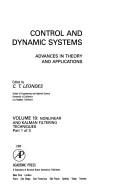 Control and Dynamic SystemsCornelius T. Leondes · 1982
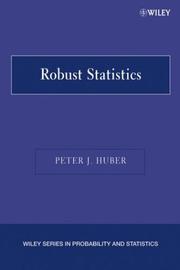 Robust statisticsPeter J. Huber · 1981
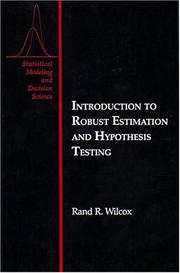 Introduction to robust estimation and hypothesis testingRand R. Wilcox · 1997
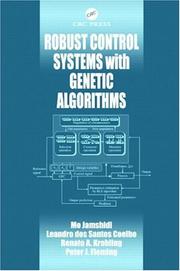 Robust Control Systems with Genetic AlgorithmsMo Jamshidi, Renato A. Krohling · 2002
- 📕Robust Statistical Methods with R, Second EditionJana Jurečková, Jan Picek · 2019
 Robust statisticsRicardo A. Maronna, Douglas R. Martin · 2006
 Directions in robust statistics and diagnosticsWerner Stahel · 1991
 Methodology in Robust and Nonparametric StatisticsJana Jureckova, Pranab Kumar Sen · 2012
Ranked by number of editions on Open Library, a rough measure of how lasting a book is.
🔗 Related topics
- Robust measures of scale In statistics, robust measures of scale are methods which quantify the statistical dispersion in a sample of numerical data while resisting outliers. These…
- L-estimator In statistics, an L-estimator (or L-statistic) is an estimator which is a linear combination of order statistics of the measurements. This can be as little…
- Mid-range In statistics, the mid-range or mid-extreme is a measure of central tendency of a sample defined as the arithmetic mean of the maximum and minimum values…
- Robust regression In robust statistics, robust regression seeks to overcome some limitations of traditional regression analysis. A regression analysis models the relationship…
- M-estimator In statistics, M-estimators are a broad class of extremum estimators for which the objective function is a sample average. Both non-linear least squares…
- Errors and residuals In statistics and optimization, errors and residuals are two closely related and easily confused measures of the deviation of an observed value of an element…
- Median absolute deviation In statistics, the median absolute deviation (MAD), also referred to as the median absolute deviation from the median (MADFM), is a robust or outlier-resistant…
- Trimmed estimator In statistics, a trimmed estimator is an estimator derived from another estimator by excluding some of the extreme values, a process called truncation…