Everything about Reservoir computing
Type of recurrent neural network with random and non-trainable internal structure
Reservoir computing is a framework for computation derived from recurrent neural network theory that maps input signals into higher dimensional computational spaces through the dynamics of a fixed, non-linear system called a reservoir. After the input signal is fed into the reservoir, which is treated as a "black box," a simple readout mechanism is trained to read the state of the reservoir and map it to the desired output. The first key benefit of this framework is that training is performed only at the readout stage, as the reservoir dynamics are fixed. The second is that the computational power of naturally available systems, both classical and quantum mechanical, can be used to reduce the effective computational cost. Wikipedia →
🧭 Start here: a 6-step reading path
- Read the overview: Reservoir computingA 5-minute orientation
- Skim a recent paper: An optoelectronic synapse based on α-In2Se3 with controllable temporal dynamics for multimode and multiscale reservoir computingInfluential work since 2022
- Pick up a classic book: Engineering and designThe most-reprinted book on the subject
- Read the landmark paper: Reservoir computing approaches to recurrent neural network trainingCited 2,689 times
- Go sideways: Echo state networkA closely related topic
- Go sideways: Liquid state machineA closely related topic
📖 Definitions
Noun A framework for computation derived from recurrent neural network theory, mapping input signals into higher-dimensional computational spaces through the dynamics of a fixed, non-linear system called a reservoir.
🗂️ The subject at a glance
🏆 Landmark papers (most cited)
Reservoir computing approaches to recurrent neural network training
Recent advances in physical reservoir computing: A review
Optoelectronic Reservoir Computing
Next generation reservoir computing
Advances in photonic reservoir computing
All-optical reservoir computing
Reservoir Computing Trends
Reservoir Computing Using Diffusive Memristors
🆕 Influential since 2022
An optoelectronic synapse based on α-In2Se3 with controllable temporal dynamics for multimode and multiscale reservoir computing
Emerging opportunities and challenges for the future of reservoir computing
In-sensor reservoir computing system for latent fingerprint recognition with deep ultraviolet photo-synapses and memristor array
A memristor-based analogue reservoir computing system for real-time and power-efficient signal processing
Brain organoid reservoir computing for artificial intelligence
📚 Books worth reading
- 📕Engineering and designUnited States. Army. Corps of Engineers. · 1957
- 📕Computational Modelling in Hydraulic and Coastal EngineeringChristopher Koutitas, Panagiotis D. Scarlatos · 2015
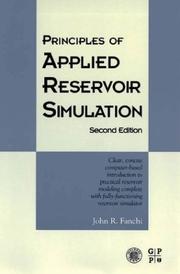 Principles of applied reservoir simulationJohn R. Fanchi · 1997
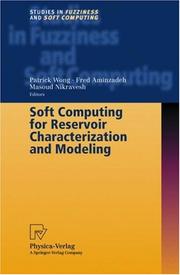 Soft computing for reservoir characterization and modelingFred Aminzadeh · 2002
- 📕Retention time simulation for Bushy Park Reservoir near Charleston, South CarolinaDavid E. Bower · 1993
 Mathematical methods and modelling in hydrocarbon exploration and productionArmin Iske · 2005
- 📕Susquehanna River basin flood control review study: Reservoir systems analysisUnited States. Army. Corps of Engineers. Baltimore District. · 1976
- 📕Introduction to Reservoir Simulation Using MATLAB/GNU OctaveKnut-Andreas Lie · 2019
Ranked by number of editions on Open Library, a rough measure of how lasting a book is.
🔗 Related topics
- Echo state network An echo state network (ESN) is a type of reservoir computer that uses a recurrent neural network with a sparsely connected hidden layer (with typically…
- Liquid state machine A liquid state machine (LSM) is a type of reservoir computer that uses a spiking neural network. An LSM consists of a large collection of units (called…
- Unconventional computing Unconventional computing (also known as alternative computing or nonstandard computation) is computing by any of a wide range of new or unusual methods…
- Quantum neural network Quantum neural networks (QNN) are computational neural network models which are based on the principles of quantum mechanics. The first ideas on quantum…
- Types of artificial neural networks Types of neural networks (NN) include a family of techniques. The simplest types have static components, including number of units, number of layers, unit…
- Quantum machine learning Quantum machine learning (QML) is the study of quantum algorithms for machine learning. It often refers to quantum algorithms for machine learning tasks…
- Recurrent neural network In artificial neural networks, recurrent neural networks (RNNs) are designed for processing sequential data, such as text, speech, and time series, where…
- Neural network (machine learning) In machine learning, a neural network (NN) or artificial neural network (ANN) is a computational model inspired by the structure and functions of biological…