Live briefing

Everything about Representation learning
Set of learning techniques in machine learning
In machine learning (ML), representation learning or feature learning is a set of techniques that allow a system to automatically discover the representations needed for feature detection or classification from raw data. This replaces manual feature engineering and allows a machine to both learn the features and use them to perform a specific task. Wikipedia →
🧭 Start here: a 6-step reading path
- Read the overview: Representation learningA 5-minute orientation
- Skim a recent paper: Simple Unsupervised Graph Representation LearningInfluential work since 2022
- Pick up a classic book: The Master AlgorithmThe most-reprinted book on the subject
- Read the landmark paper: Learning representations by back-propagating errorsCited 26,371 times
- Go sideways: Unsupervised learningA closely related topic
- Go sideways: Self-supervised learningA closely related topic
📖 Definitions
No dictionary entry for this exact phrase.
🗂️ The subject at a glance
🏆 Landmark papers (most cited)
Learning representations by back-propagating errors
Representation Learning: A Review and New Perspectives
Toward Causal Representation Learning
Learning multiple layers of representation
Hippocampal representation in place learning
Network Representation Learning: A Survey
Graph representation learning: a survey
Disentangled Representation Learning
🆕 Influential since 2022
📚 Books worth reading
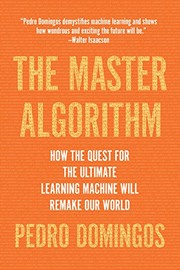 The Master AlgorithmPedro Domingos · 2015
 Reclaiming DemocracyAlbena Azmanova, Mihaela Mihai · 2015
 The development and meaning ofpsychological distanceRodney R. Cocking, K. Ann Renninger · 1993
 Children's understandingGraeme S. Halford · 1992
 Developing Creative Thinking in Beginning DesignStephen Temple · 2018
 The Algebraic MindGary F. Marcus · 2001
- 📕Associative Learning and Representation : an EPS Workshop for N. J. MackintoshAnthony Dickinson, Ian P. L. McLaren · 2019
- 📕Young children learning through schemasCath Arnold, Katey Mairs · 2012
Ranked by number of editions on Open Library, a rough measure of how lasting a book is.
🔗 Related topics
- Unsupervised learning Unsupervised learning is a framework in machine learning where, in contrast to supervised learning, algorithms learn patterns exclusively from unlabeled…
- Self-supervised learning Self-supervised learning (SSL) is a paradigm in machine learning where a model is trained on a task using the data itself to generate supervisory signals…
- Autoencoder An autoencoder is a type of artificial neural network used to learn efficient codings of unlabeled data (unsupervised learning). An autoencoder learns…
- Restricted Boltzmann machine A restricted Boltzmann machine (RBM) (also called a restricted Sherrington–Kirkpatrick model with external field or restricted stochastic Ising–Lenz–Little…
- Graph neural network Graph neural networks (GNNs) are artificial neural networks designed for tasks whose inputs are graphs. Because graphs usually do not have a canonical…
- Weak supervision Weak supervision (also known as semi-supervised learning) is a paradigm in machine learning, the relevance and notability of which increased with the advent…
- Types of artificial neural networks Types of neural networks (NN) include a family of techniques. The simplest types have static components, including number of units, number of layers, unit…
- Convolutional neural network A convolutional neural network (CNN) is a type of feedforward neural network that learns features via filter (or kernel) optimization. This type of deep…