Live briefing
Everything about Relative volatility
Comparative volatility of components in a solution
Relative volatility is a measure comparing the vapor pressures of the components in a liquid mixture of chemicals. This quantity is widely used in designing large industrial distillation processes. In effect, it indicates the ease or difficulty of using distillation to separate the more volatile components from the less volatile components in a mixture. By convention, relative volatility is usually denoted as. Wikipedia →
🧭 Start here: a 6-step reading path
- Read the overview: Relative volatilityA 5-minute orientation
- Skim a recent paper: Study of dynamic performance of heat-integrated distillation columns considering the effect of relative volatility of the mixturesInfluential work since 2022
- Pick up a classic book: Chemical Process SafetyThe most-reprinted book on the subject
- Read the landmark paper: On the Relation between the Expected Value and the Volatility of the Nominal Excess Return on StocksCited 11,555 times
- Go sideways: Vapor–liquid equilibriumA closely related topic
- Go sideways: Fenske equationA closely related topic
📖 Definitions
No dictionary entry for this exact phrase.
🗂️ The subject at a glance
🏆 Landmark papers (most cited)
On the Relation between the Expected Value and the Volatility of the Nominal Excess Return on Stocks
Calibrating volatility surfaces via relative-entropy minimization
Relative arbitrage in volatility-stabilized markets
Effects of relative volatility ranking to the design of reactive distillation
Relative idiosyncratic volatility and the timing of corporate insider trading
Vapor pressures and relative volatility of ethyl and methyl parathion
Nominal exchange rate volatility, relative price volatility, and the real exchange rate
Solvent Effect on Relative Volatility. n-Hexane-Hexene-1 System.
🆕 Influential since 2022
Study of dynamic performance of heat-integrated distillation columns considering the effect of relative volatility of the mixtures
How Does Selling Capability Impact Firm Value? The Moderating Roles of Relative Strategic Emphasis, Market Volatility, and Technological Volatility
Distribution Characteristics of Wind Speed Relative Volatility and Its Influence on Output Power
Capturing the Relative‐Humidity‐Sensitive Gas–Particle Partitioning of Organic Aerosols in a 2D Volatility Basis Set
The relative importance of overnight sentiment versus trading-hour sentiment in volatility forecasting
📚 Books worth reading
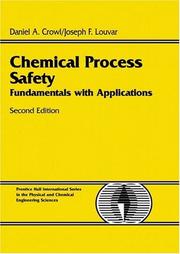 Chemical Process SafetyDaniel A. Crowl, Joseph F. Louvar · 1989
 Treaty Occupationay ToxicologySuelen Queiroz · 2010
 The dark side of valuationAswath Damodaran · 2001
- 📕The volatility of the relative price of commodities in terms of manufactures across exchange regimesHong Liang · 1998
 Discrete Time Series, Processes, and Applications in FinanceGilles Zumbach · 2012
- 📕Relative Volatility of Commodity PricesRabah Arezki, Daniel Lederman · 2011
 Elements of AccessDavid M. Levinson, Wes Marshall · 2017
 Methods for the investigation of canceling inks and other stamping inksErvin Edgar Ewell · 1903
Ranked by number of editions on Open Library, a rough measure of how lasting a book is.
🔗 Related topics
- Vapor–liquid equilibrium In thermodynamics and chemical engineering, the vapor–liquid equilibrium (VLE) describes the distribution of chemical species between the vapor phase and…
- Fenske equation The Fenske equation in continuous fractional distillation is an equation used for calculating the minimum number of theoretical plates required for the…
- Distillation Distillation, also classical distillation, is the process of separating the component substances of a liquid mixture of two or more chemically discrete…
- Continuous distillation Continuous distillation, a form of distillation, is an ongoing separation in which a mixture is continuously (without interruption) fed into the process…
- Fractional distillation Fractional distillation is the separation of a mixture into its component parts, or fractions. Chemical compounds are separated by heating them to a temperature…
- Fractionating column A fractionating column or fractional column is equipment used in the distillation of liquid mixtures to separate the mixture into its component parts,…
- Volatility (chemistry) In chemistry, volatility is a material quality which describes how readily a substance vaporizes. At a given temperature and pressure, a substance with…
- Azeotrope An azeotrope (/əˈziːəˌtroʊp/) or a constant heating point mixture is a mixture of two or more liquids whose proportions cannot be changed by simple distillation…