Live briefing
Everything about Relapse
Return of a sign, symptom, or disease after a remission
In internal medicine, relapse or recidivism is a recurrence of a past condition. For example, multiple sclerosis and malaria often exhibit peaks of activity and sometimes very long periods of dormancy, followed by relapse or recrudescence. Wikipedia →
🧭 Start here: a 6-step reading path
- Read the overview: RelapseA 5-minute orientation
- Skim a recent paper: Association of Drug Cues and Craving With Drug Use and RelapseInfluential work since 2022
- Pick up a classic book: Devotions upon emergent occasionsThe most-reprinted book on the subject
- Read the landmark paper: Human Breast Cancer: Correlation of Relapse and Survival with Amplification of the HER-2/ neu OncogeneCited 9,593 times
- Go sideways: Conditioned place preferenceA closely related topic
- Go sideways: Self-administrationA closely related topic
📖 Definitions
Verb To fall back again; to slide or turn back into a former state or practice.
Verb To recur; to worsen, be aggravated (after a period of improvement).
Verb To return to a vice, especially self-harm or alcoholism, failing to maintain abstinence.
Verb To slip or slide back physically; to turn back.
🗂️ The subject at a glance
🏆 Landmark papers (most cited)
Human Breast Cancer: Correlation of Relapse and Survival with Amplification of the HER-2/ neu Oncogene
Prevention of relapse/recurrence in major depression by mindfulness-based cognitive therapy.
Predicting relapse: A meta-analysis of sexual offender recidivism studies.
Copolymer 1 reduces relapse rate and improves disability in relapsing‐remitting multiple sclerosis
Context, ambiguity, and unlearning: sources of relapse after behavioral extinction
The reinstatement model of drug relapse: history, methodology and major findings
Rate of Pregnancy-Related Relapse in Multiple Sclerosis
Pretreatment cytogenetic abnormalities are predictive of induction success, cumulative incidence of relapse, and overall survival in adult patients with de novo acute myeloid leukemia: results from Cancer and Leukemia Group B (CALGB 8461)
🆕 Influential since 2022
Association of Drug Cues and Craving With Drug Use and Relapse
Residual ctDNA after treatment predicts early relapse in patients with early-stage non-small cell lung cancer
Association of Early Progression Independent of Relapse Activity With Long-term Disability After a First Demyelinating Event in Multiple Sclerosis
Reversing insufficient photothermal therapy-induced tumor relapse and metastasis by regulating cancer-associated fibroblasts
Harmonizing Definitions for Progression Independent of Relapse Activity in Multiple Sclerosis
📚 Books worth reading
 Devotions upon emergent occasionsJohn Donne · 1923
 Passages through recoveryTerence T. Gorski · 1989
 Sober for GoodAnne M. Fletcher · 2001
 Kicking addictive habits once and for allDennis C. Daley · 1991
 Relax, recoverPatricia Wuertzer · 1988
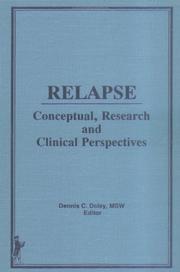 RelapseDennis C. Daley · 1987
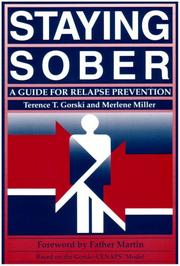 Staying soberTerence T. Gorski · 1986
 Spirillum feverH. Vandyke Carter · 1882
Ranked by number of editions on Open Library, a rough measure of how lasting a book is.
🔗 Related topics
- Conditioned place preference Conditioned place preference (CPP) is a form of Pavlovian conditioning used to measure the motivational effects of objects or experiences. This motivation…
- Self-administration Self-administration is, in its medical sense, the process of a subject administering a pharmacological substance to themself. A clinical example of this…
- BP-897 BP-897 is a drug used in scientific research which acts as a potent selective dopamine D3 receptor partial agonist with an in vitro intrinsic activity…
- SB-277,011-A SB-277,011A is a drug which acts as a potent and selective dopamine D3 receptor antagonist, which is around 80–100 times selective for D3 over D2, and…
- SKF-81,297 SKF-81,297 is a dopamine D1-like receptor agonist and stimulant-like drug of the 3-benzazepine family which was under development for the treatment of…
- CP-94253 CP-94253 is a drug of the tetrahydropyridinylpyrrolopyridine family which acts as a potent and selective serotonin 5-HT1B receptor agonist, with approximately…
- Peter Kalivas Peter W. Kalivas is an American neuroscientist, author, and academic. He is a Distinguished University Professor in the Department of Neuroscience at the…
- L-741,626 L-741,626 is a drug which acts as a potent and selective antagonist for the dopamine receptor D2. It has good selectivity over the related D3 and D4 subtypes…