Everything about Refractive error
Problem with focusing light accurately on the retina due to the shape of the eye

Refractive error is a problem with focusing light accurately on the retina due to the shape of the eye and/or cornea. The most common types of refractive error are near-sightedness, far-sightedness, astigmatism, and presbyopia. Near-sightedness results in far away objects being blurry, far-sightedness and presbyopia result in close objects being blurry, and astigmatism causes objects to appear stretched out or blurry. Other symptoms may include double vision, headaches, and eye strain. Wikipedia →
🧭 Start here: a 6-step reading path
- Read the overview: Refractive errorA 5-minute orientation
- Skim a recent paper: Refractive error and vision related quality of lifeInfluential work since 2022
- Pick up a classic book: Primary care optometryThe most-reprinted book on the subject
- Read the landmark paper: Refractive error and glaucomaCited 141 times
- Go sideways: FarsightednessA closely related topic
- Go sideways: EmmetropiaA closely related topic
📖 Definitions
Noun is a problem with focusing light accurately on the retina due to the shape of the eye and or cornea The most common types of refractive error are near-sightedness, far-sightedness, astigmatism, and presbyopia.
🗂️ The subject at a glance
🏆 Landmark papers (most cited)
Refractive error and glaucoma
Utility and Uncorrected Refractive Error
Corneal asphericity and refractive error
Refractive error in cataract surgery after previous refractive surgery
VEGF and Refractive Error
Refractive Error in Central India
Recovery of Refractive Error After Corneal Refractive Therapy
Refractive error in underserved adults
🆕 Influential since 2022
Refractive error and vision related quality of life
Peripheral optical anisotropy in refractive error groups
The prevalence of refractive error in schoolchildren
Refractive Error in Inherited Retinal Disease
Effectiveness of Laser Refractive Surgery to Address Anisometropic Amblyogenic Refractive Error in Children
📚 Books worth reading
 Primary care optometryTheodore P. Grosvenor · 1982
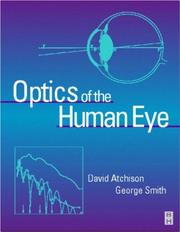 Optics of the human eyeDavid Atchison, George Smith · 2000
- 📕Neurological Treatment for Nearsightedness and Related Vision ProblemsJohn William Yee · 2019
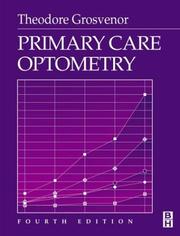 Primary Care OptometryTheodore Grosvenor · 1988
 The retinoscopy bookJohn M. Corboy · 1979
 The fine art of prescribing glasses without making a spectacle of yourselfBenjamin Milder · 1978
- 📕Lectures on the errors of refraction and their correction with glassesFrancis Valk · 1892
- 📕Refraction of the eyeAlfred Cowan · 1938
Ranked by number of editions on Open Library, a rough measure of how lasting a book is.
🔗 Related topics
- Farsightedness Far-sightedness, also known as long-sightedness, hypermetropia, and hyperopia, is a condition of the eye where distant objects are seen clearly but near…
- Emmetropia Emmetropia is the state of vision in which a faraway object at infinity is in sharp focus with the ciliary muscle in a relaxed state. That condition of…
- Astigmatism Astigmatism is a vision problem that occurs when the lens or cornea of an eye are slightly egg-shaped rather than spherical. The lack of rotational symmetry…
- Refractive surgery Refractive surgery is an optional eye surgery used to improve the refractive state of the eye and thereby decrease or eliminate dependency on glasses or…
- Myopia Myopia, also known as nearsightedness or short-sightedness, is an eye condition where light from distant objects focuses in front of, instead of on, the…
- Presbyopia Presbyopia is a physiological insufficiency of optical accommodation associated with the aging of the eye; it results in progressively worsening ability…
- Intraocular lens An intraocular lens (IOL) is a lens implanted in the eye usually as part of a treatment for cataracts or for correcting other vision problems such as near-sight…
- Anisometropia Anisometropia is a condition in which a person's eyes have substantially differing refractive power. Generally, a difference in power of one diopter (1D)…