Everything about Redirection (computing)
Form of interprocess communication

In computing, redirection is a form of interprocess communication, and is a function common to most command-line interpreters, including the various Unix shells that can redirect standard streams to user-specified locations. The concept of redirection is quite old, dating back to the earliest operating systems (OS). A discussion of the design goals for redirection can be found already in the 1971 description of the input-output subsystem of the Multics OS. However, prior to the introduction of UNIX OS with its "pipes", redirection in operating systems was hard or even impossible to do. Wikipedia →
🧭 Start here: a 6-step reading path
- Read the overview: Redirection (computing)A 5-minute orientation
- Pick up a classic book: The web application hacker's handbookThe most-reprinted book on the subject
- Read the landmark paper: Dynamic redirection of real-time data streams for elastic stream computingCited 14 times
- Go sideways: Standard streamsA closely related topic
- Go sideways: Thompson shellA closely related topic
📖 Definitions
No dictionary entry for this exact phrase.
🏆 Landmark papers (most cited)
📚 Books worth reading
 The web application hacker's handbookDafydd Stuttard, Marcus Pinto · 2007
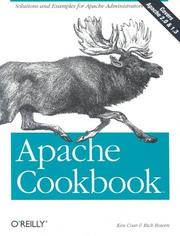 Apache CookbookKen Coar, Rich Bowen · 2003
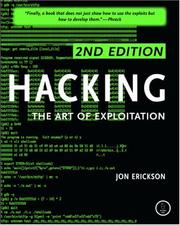 HackingJon Erickson, Jon Erickson · 2003
- 📕ADP systemsUnited States. General Accounting Office · 1986
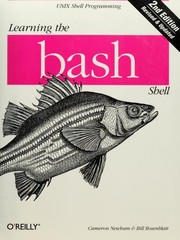 Learning the bash ShellCameron Newham, Bill Rosenblatt · 1995
 The UNIX operating systemChristian, Kaare, Kaare Christian · 1983
 TCP/IP IllustratedW. Richard Stevens, Kevin R. Fall · 1993
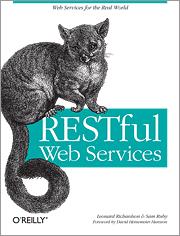 RESTful Web ServicesLeonard Richardson, Sam Ruby · 2007
Ranked by number of editions on Open Library, a rough measure of how lasting a book is.
🔗 Related topics
- Standard streams In computer programming, standard streams are preconnected input and output communication channels between a computer program and its environment when…
- Thompson shell The Thompson shell was the first Unix shell, introduced in the first version of Unix in 1971, and was written by Ken Thompson. It was a simple command…
- Bash (Unix shell) Bash (short for "Bourne Again SHell") is an interactive command interpreter and command language developed for Unix-like operating systems. Supported by…
- C shell The C shell (csh or the improved version, tcsh) is a Unix shell created by Bill Joy while he was a graduate student at University of California, Berkeley…
- Pipeline (Unix) In Unix-like computer operating systems, a pipeline is a mechanism for inter-process communication using message passing. A pipeline is a set of processes…
- Tee (command) tee is a shell command that copies data from standard input to one or more files in addition to standard output, duplicating the input to each output.…
- Cat (Unix) cat is a shell command for writing the content of a file or input stream to standard output. The name is an abbreviation of catenate, a variant form of…
- Script (Unix) The script command is a Unix utility that records a terminal session. It dates back to the 1979 3.0 Berkeley Software Distribution (BSD). A script session…