Live briefing

Everything about Recursive definition
Defining elements of a set in terms of other elements in the set
In mathematics and computer science, a recursive definition, or inductive definition, is used to define the elements in a set in terms of other elements in the set. Some examples of recursively definable objects include factorials, natural numbers, Fibonacci numbers, and the Cantor ternary set. Wikipedia →
🧭 Start here: a 6-step reading path
- Read the overview: Recursive definitionA 5-minute orientation
- Skim a recent paper: Recursive definition and two edge-disjoint Hamiltonian cycles of bubble-sort star graphsInfluential work since 2022
- Pick up a classic book: The C Programming LanguageThe most-reprinted book on the subject
- Read the landmark paper: Formal model of internal measurement: Alternate changing between recursive definition and domain equationCited 27 times
- Go sideways: RecursionA closely related topic
- Go sideways: Recursion (computer science)A closely related topic
📖 Definitions
Noun A definition of a term within which the term itself appears, and that is well-founded, avoiding an infinite regress.
🗂️ The subject at a glance
🏆 Landmark papers (most cited)
Formal model of internal measurement: Alternate changing between recursive definition and domain equation
Theory of concave gratings based on a recursive definition of facet positions
A Recursive Definition of Goodness of Space for Bridging the Concepts of Space and Place for Sustainability
The Recursive Definition of Stochastic Linear Programming Problems within an Algebraic Modeling Language
Recursive definition for elements of reality
p-order Normal Cloud Model Recursive Definition and Analysis of Bidirectional Cognitive Computing
Operation-oriented query language approach for recursive queries—part 1. Functional definition
On definition trees of ordinal recursive functionals: Reduction of the recursion orders by means of type level raising
🆕 Influential since 2022
📚 Books worth reading
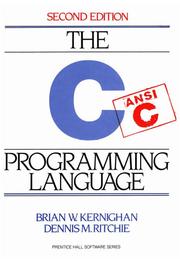 The C Programming LanguageBrian W. Kernighan, Dennis MacAlistair Ritchie · 1978
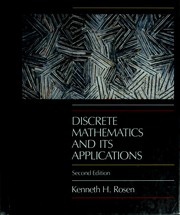 Discrete Mathematics and Its ApplicationsKenneth H. Rosen · 1988
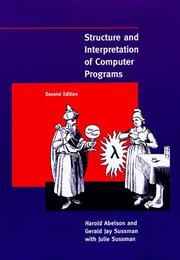 Structure and Interpretation of Computer Programs (SICP)Harold Abelson, Gerald Jay Sussman · 1985
 Mathematical structures for computer scienceJudith L. Gersting · 1982
 Discrete and combinatorial mathematicsRalph P. Grimaldi · 1985
 Discrete mathematicsKenneth A. Ross · 1985
 Learning to program with AliceWanda Dann, Wanda P Dann · 2004
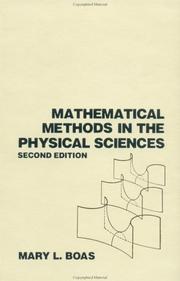 Mathematical Methods in the Physical SciencesMary L. Boas, Mary Layne Boas · 1966
Ranked by number of editions on Open Library, a rough measure of how lasting a book is.
🔗 Related topics
- Recursion Recursion occurs when the definition of a concept or process depends on a simpler or previous version of itself. Recursion is used in a variety of disciplines…
- Recursion (computer science) In computer science, recursion is a method of solving a computational problem where the solution depends on solutions to smaller instances of the same…
- Primitive recursive function In computability theory, a primitive recursive function is, roughly speaking, a function that can be computed by a computer program whose loops are all…
- Kleene's recursion theorem In computability theory, Kleene's recursion theorems are a pair of fundamental results about the application of computable functions to their own descriptions…
- Computably enumerable set In computability theory, a set S of natural numbers is called computably enumerable (c.e.), recursively enumerable (r.e.), semidecidable, partially decidable…
- General recursive function In mathematical logic and computer science, a general recursive function, partial recursive function, or μ-recursive function is a partial function from…
- Structural induction Structural induction is a proof method that is used in mathematical logic (e.g., in the proof of Łoś' theorem), computer science, graph theory, and some…
- Constructive set theory Axiomatic constructive set theory is an approach to mathematical constructivism following the program of axiomatic set theory. The same first-order language…