Live briefing
Everything about Reading Recovery
Early literacy intervention
Reading Recovery is a controversial short-term intervention approach designed for English-speaking children aged five or six, who are the lowest achieving in literacy after their first year of school. For instance, a child who is unable to read the simplest of books or write their own name, after a year in school, would be appropriate for a referral to a Reading Recovery program. The intervention involves intensive one-to-one lessons for 30 minutes a day with a teacher trained in the Reading Recovery method, for between 12 and 20 weeks. Wikipedia →
🧭 Start here: a 6-step reading path
- Read the overview: Reading RecoveryA 5-minute orientation
- Skim a recent paper: Machine reading and recovery of colors for hemoglobin-related bioassays and bioimagingInfluential work since 2022
- Pick up a classic book: Hooked on booksThe most-reprinted book on the subject
- Read the landmark paper: Phonological processing skills and the Reading Recovery Program.Cited 179 times
- Go sideways: Teaching Reading, National Inquiry into the Teaching of LiteracyA closely related topic
- Go sideways: History of learning to readA closely related topic
📖 Definitions
No dictionary entry for this exact phrase.
🗂️ The subject at a glance
🏆 Landmark papers (most cited)
Phonological processing skills and the Reading Recovery Program.
An Evaluation of Reading Recovery
Reading Recovery: Exploring the Effects on First-Graders' Reading Motivation and Achievement
Scaffolding in Reading Recovery
An International Meta-Analysis of Reading Recovery
Predictors of “recovery” from reading disability
Viewing Reading Recovery as a Restructuring Phenomenon
Predictors of Reading Recovery book levels
🆕 Influential since 2022
Machine reading and recovery of colors for hemoglobin-related bioassays and bioimaging
Long-Term Impacts of Reading Recovery through 3rd and 4th Grade: A Regression Discontinuity Study
Phonological recovery during Chinese sentence reading: effects of rime and tone
Reading recovery: a longitudinal meta-analysis
Connections are the Opposite of Addiction: Recovery Reading Groups in Public Libraries
📚 Books worth reading
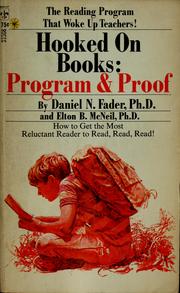 Hooked on booksDaniel N. Fader · 1966
 Helping your teen-age studentMarvin Cohn · 1979
Ranked by number of editions on Open Library, a rough measure of how lasting a book is.
🔗 Related topics
- Teaching Reading, National Inquiry into the Teaching of Literacy Teaching Reading, National Inquiry into the Teaching of Literacy, published in December 2005, is a review of practices in the literacy acquisition of Australian…
- History of learning to read The history of learning to read dates back to the invention of writing during the 4th millennium BC. Concerning the English language in the United States…
- Whole language Whole language is a discredited philosophy of reading and an educational method originally developed for teaching literacy in English to young children…
- Phonics This article contains phonetic transcriptions in the International Phonetic Alphabet (IPA). For an introductory guide on IPA symbols, see Help:IPA. For…
- Marie Clay Dame Marie Mildred Clay DBE FRSNZ (/ˈmɑːri/ MAR-ee; née Irwin; 3 January 1926 – 13 April 2007) was a researcher from New Zealand known for her work in…
- Teaching reading Teaching reading has significant differences between teaching reading for alphabetic languages and for logographic languages. Educators have debated for…
- Three cueing Three cueing, also known as the searchlight model or MSV (which stands for meaning, syntax, and visual information), is a controversial method of teaching…
- Emily Hanford Emily Hanford is an American education reporter who hosted the APM Reports podcast Sold a Story. The Milwaukee Journal Sentinel called her "the most prominent…