Live briefing
Everything about Reaction engine
Type of engine
A reaction engine is an engine or motor that produces thrust by expelling reaction mass, in accordance with Newton's third law of motion. This law of motion is commonly paraphrased as: "For every action force there is an equal, but opposite, reaction force." Wikipedia →
🧭 Start here: a 6-step reading path
- Read the overview: Reaction engineA 5-minute orientation
- Skim a recent paper: RuO2 electronic structure and lattice strain dual engineering for enhanced acidic oxygen evolution reaction performanceInfluential work since 2022
- Pick up a classic book: Modern control systemsThe most-reprinted book on the subject
- Read the landmark paper: Cell Surface Engineering by a Modified Staudinger ReactionCited 2,395 times
- Go sideways: Pulsed nuclear thermal rocketA closely related topic
- Go sideways: Multistage rocketA closely related topic
📖 Definitions
Noun Any engine that generates thrust by expelling matter, especially hot gases produced by igniting a fuel; either a rocket engine or several types of jet engine.
🗂️ The subject at a glance
🏆 Landmark papers (most cited)
Cell Surface Engineering by a Modified Staudinger Reaction
Photosynthetic reaction center as a quantum heat engine
Hydrogen-oxygen reaction mechanism and its implication to hydrogen engine combustion
Engine hot spots: Modes of auto-ignition and reaction propagation
Hydrocarbon ignition: Automatic generation of reaction mechanisms and applications to modeling of engine knock
Development and Validation of a Reduced Reaction Mechanism for Biodiesel-Fueled Engine Simulations
An autonomous organic reaction search engine for chemical reactivity
An integrated self-optimizing programmable chemical synthesis and reaction engine
🆕 Influential since 2022
RuO2 electronic structure and lattice strain dual engineering for enhanced acidic oxygen evolution reaction performance
Engineering a local acid-like environment in alkaline medium for efficient hydrogen evolution reaction
Lattice‐Strain Engineering for Heterogenous Electrocatalytic Oxygen Evolution Reaction
Application of deep eutectic solvent in biodiesel reaction: RSM optimization, CI engine test, cost analysis and research dynamics
MOF-Derived High-Entropy Oxide: A “Catalytic Engine” That Ignites the HC-SCR Reaction
📚 Books worth reading
 Modern control systemsRichard C. Dorf, Richard C Dorf · 1967
 Time Series AnalysisGeorge E. P. Box, Gwilym M. Jenkins · 1970
 Chemical Reaction EngineeringMartin Schmal · 2014
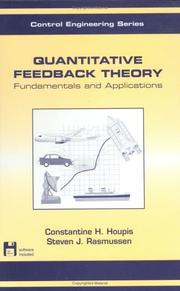 Quantitative feedback theoryConstantine H. Houpis, Steven J. Rasmussen · 1999
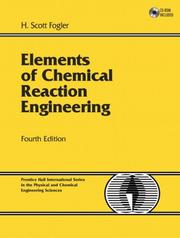 Elements of Chemical Reaction EngineeringH. Scott Fogler · 1998
 Numerical Modeling of AARVictor Saouma · 2013
- 📕Reaction Engineering PrinciplesHimadri Roy Ghatak · 2016
- 📕Chemische VerfahrenstechnikKlaus Hertwig, Lothar Martens · 2007
Ranked by number of editions on Open Library, a rough measure of how lasting a book is.
🔗 Related topics
- Pulsed nuclear thermal rocket A pulsed nuclear thermal rocket is a type of nuclear thermal rocket (NTR) concept developed at the Polytechnic University of Catalonia, Spain, and presented…
- Multistage rocket A multistage rocket or step rocket is a launch vehicle that uses two or more rocket stages, each of which contains its own engines and propellant. A tandem…
- Working mass Working mass, also referred to as reaction mass, is a mass against which a system operates in order to produce acceleration. In the case of a chemical…
- Relativistic rocket Relativistic rocket means any spacecraft that travels close enough to light speed for relativistic effects to become significant. The meaning of "significant"…
- Tsiolkovsky rocket equation The classical rocket equation, Tsiolkovsky rocket equation, or ideal rocket equation is a mathematical equation that describes the motion of vehicles that…
- Photon rocket A photon rocket is a rocket that uses thrust from the momentum of emitted photons (radiation pressure by emission) for its propulsion. Photon rockets have…
- Cold gas thruster A cold gas thruster (or a cold gas propulsion system) is a type of rocket engine which uses the expansion of a (typically inert) pressurized gas to generate…
- Specific impulse Specific impulse (usually abbreviated as Isp) is a physical quantity defined as the ratio of change in momentum (impulse) to the mass used, usually fuel…