Live briefing
Everything about Random testing
Software testing technique that tests programs with random inputs
Random testing is a black-box software testing technique where programs are tested by generating random, independent inputs. Results of the output are compared against software specifications to verify that the test output is pass or fail. In case of absence of specifications the exceptions of the language are used which means if an exception arises during test execution then it means there is a fault in the program, it is also used as a way to avoid biased testing. Wikipedia →
🧭 Start here: a 6-step reading path
- Read the overview: Random testingA 5-minute orientation
- Skim a recent paper: Direct Oral Anticoagulants Versus Warfarin in Patients With Atrial Fibrillation: Patient-Level Network Meta-Analyses of Randomized Clinical Trials With Interaction Testing by Age and SexInfluential work since 2022
- Pick up a classic book: Randomization testsThe most-reprinted book on the subject
- Read the landmark paper: Random effects structure for confirmatory hypothesis testing: Keep it maximalCited 8,806 times
- Go sideways: Differential testingA closely related topic
- Go sideways: Concolic testingA closely related topic
📖 Definitions
No dictionary entry for this exact phrase.
🏆 Landmark papers (most cited)
Random effects structure for confirmatory hypothesis testing: Keep it maximal
An Evaluation of Random Testing
Testing the random walk hypothesis
Exact testing with random permutations
Partition testing vs. random testing: the influence of uncertainty
Mirror adaptive random testing
RESTRICTED RANDOM TESTING: ADAPTIVE RANDOM TESTING BY EXCLUSION
Testing parallel random number generators
🆕 Influential since 2022
Direct Oral Anticoagulants Versus Warfarin in Patients With Atrial Fibrillation: Patient-Level Network Meta-Analyses of Randomized Clinical Trials With Interaction Testing by Age and Sex
Testing correlation of unlabeled random graphs
On the use of random forest for two-sample testing
Random Testing and Evolutionary Testing for Fuzzing GraphQL APIs
Mutually testing source-device-independent quantum random number generator
📚 Books worth reading
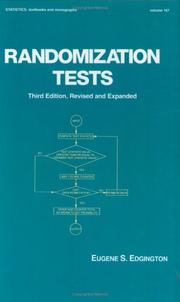 Randomization testsEugene S. Edgington, Eugene Edgington · 1980
- 📕Randomised response-adaptive designs in clinical trialsAtanu Biswas, Anthony C. Atkinson · 2009
 Testing static random access memoriesSaid Hamdioui · 2004
- 📕CM-2 environmental/modal testing of Spacehab racksMark E. McNelis · 2001
 ProceedingsIEEE International Workshop on Memory Technology, Design, and Testing (1997 San Jose, Calif.) · 1997
- 📕Random vibration and torque tests of fasteners secured with cable, room temperature vulcanized (RTV) rubber, and closed cell foam to support the launch of STS-82V. H. Yost · 1997
 Proceedings of the 2002 IEEE International Workshop on Memory Technology, Design and Testing : (MTDT 2002) : 10-12 July, 2002, Isle of Bendor, FranceIEEE International Workshop on Memory Technology, Design and Testing (10th 2002 Isle of Bendor, France) · 2002
- 📕Update on the NASA GRC Stirling technology development projectLanny G. Thieme · 2000
Ranked by number of editions on Open Library, a rough measure of how lasting a book is.
🔗 Related topics
- Differential testing Differential testing, also known as differential fuzzing, is a software testing technique that detect bugs, by providing the same input to a series of…
- Concolic testing Concolic testing (a portmanteau of concrete and symbolic, also known as dynamic symbolic execution) is a hybrid software verification technique that performs…
- Fuzzing In programming and software development, fuzzing or fuzz testing is an automated software testing technique that involves providing invalid, unexpected…
- Functional verification Functional verification is the task of verifying that a logic design conforms to specification. Functional verification attempts to answer the question…
- Compiler correctness In computing, compiler correctness is the branch of computer science that deals with trying to show that a compiler behaves according to its language specificat…
- Automatic bug fixing Automatic bug-fixing is the automatic repair of software bugs without the intervention of a human programmer. It is also commonly referred to as automatic…
- Software testing Software testing is the act of checking whether software meets its intended objectives and satisfies expectations. Software testing can provide objective…
- Dafny Dafny is an imperative and functional compiled language that compiles to other programming languages, such as C#, Java, JavaScript, Go, and Python. It…