Live briefing
Everything about Random feature
Machine learning technique
Random features (RF) are a technique used in machine learning to approximate kernel methods, introduced by Ali Rahimi and Ben Recht in their 2007 paper "Random Features for Large-Scale Kernel Machines", and extended by. RF uses a Monte Carlo approximation to kernel functions by randomly sampled feature maps. It is used for datasets that are too large for traditional kernel methods like support vector machine, kernel ridge regression, and gaussian process. Wikipedia →
🧭 Start here: a 6-step reading path
- Read the overview: Random featureA 5-minute orientation
- Skim a recent paper: Performance analysis of machine learning models for intrusion detection system using Gini Impurity-based Weighted Random Forest (GIWRF) feature selection techniqueInfluential work since 2022
- Pick up a classic book: The Sesame Street Library Vol. 14 with Jim Henson's MuppetsThe most-reprinted book on the subject
- Read the landmark paper: Random subspace method for multivariate feature selectionCited 161 times
- Go sideways: Kernel methodA closely related topic
- Go sideways: Radial basis function kernelA closely related topic
📖 Definitions
No dictionary entry for this exact phrase.
🗂️ The subject at a glance
🏆 Landmark papers (most cited)
Random subspace method for multivariate feature selection
Random Forests with ensemble of feature spaces
Feature Selection for Intrusion Detection Using Random Forest
Random KNN feature selection - a fast and stable alternative to Random Forests
Hierarchical Feature Selection for Random Projection
Random feature weights for decision tree ensemble construction
Random walks for feature-preserving mesh denoising
Person Reidentification by Multiscale Feature Representation Learning With Random Batch Feature Mask
🆕 Influential since 2022
Performance analysis of machine learning models for intrusion detection system using Gini Impurity-based Weighted Random Forest (GIWRF) feature selection technique
A novel random multi-subspace based ReliefF for feature selection
Distance Correlation-Based Feature Selection in Random Forest
Random feature selection using random subspace logistic regression
Generalization bounds for sparse random feature expansions
📚 Books worth reading
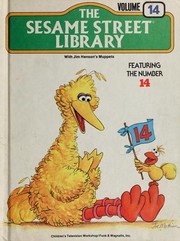 The Sesame Street Library Vol. 14 with Jim Henson's MuppetsMichael K. Frith · 1978
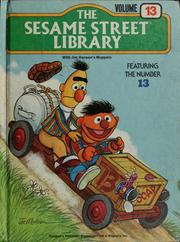 The Sesame Street Library Vol. 13 with Jim Henson's MuppetsMichael K. Frith · 1978
 The Sesame Street Library Vol. 10 (T) with Jim Henson's MuppetsMichael K. Frith · 1978
 The Sesame Street Library Vol. 7 (N-O-P) with Jim Henson's MuppetsMichael K. Frith · 1978
 The Sesame Street Library Vol. 2 (C-D) with Jim Henson's MuppetsMichael K. Frith · 1978
 The Sesame Street Library Vol. 8 (Q-R) with Jim Henson's MuppetsMichael K. Frith · 1978
 The Sesame Street Library Vol. 15 with Jim Henson's MuppetsMichael K. Frith · 1978
 The Sesame Street Library Vol. 6 (L-M) with Jim Henson's MuppetsMichael K. Frith · 1978
Ranked by number of editions on Open Library, a rough measure of how lasting a book is.
🔗 Related topics
- Kernel method In machine learning, kernel machines are a class of algorithms for pattern analysis, whose best known member is the support-vector machine (SVM). These…
- Radial basis function kernel In machine learning, the radial basis function kernel, or RBF kernel, is a popular kernel function used in various kernelized learning algorithms. In particular…
- Regularized least squares Regularized least squares (RLS) is a family of methods for solving the least-squares problem while using regularization to further constrain the resulting…
- Least-squares support vector machine Least-squares support-vector machines (LS-SVM) for statistics and in statistical modeling, are least-squares versions of support-vector machines (SVM)…
- Support vector machine In machine learning, a support vector machine (SVM) or support vector network is a supervised max-margin model with associated learning algorithms that…
- Low-rank matrix approximation Low-rank matrix approximations are essential tools in the application of kernel methods to large-scale learning problems. Kernel methods (for instance…
- Multiple kernel learning Multiple kernel learning refers to a set of machine learning methods that use a predefined set of kernels and learn an optimal linear or non-linear combination…
- Kosambi–Karhunen–Loève theorem In the theory of stochastic processes, the Karhunen–Loève theorem (named after Kari Karhunen and Michel Loève), also known as the Kosambi–Karhunen–Loève…