Live briefing
Everything about Random energy model
In the statistical physics of disordered systems, the random energy model is a toy model of a system with quenched disorder, such as a spin glass, having a first-order phase transition. It concerns the statistics of a collection of spins so that the number of possible states for the system is. The energies of such states are independent and identically distributed Gaussian random variables with zero mean and a variance of. Many properties of this model can be computed exactly. Its simplicity makes this model suitable for pedagogical introduction of concepts like quenched disorder and replica symmetry. Wikipedia →
🧭 Start here: a 6-step reading path
- Read the overview: Random energy modelA 5-minute orientation
- Skim a recent paper: Stochastic analysis of load-transfer mechanism of energy piles by random finite difference modelInfluential work since 2022
- Pick up a classic book: The personal MBAThe most-reprinted book on the subject
- Read the landmark paper: Random-energy model: An exactly solvable model of disordered systemsCited 1,102 times
- Go sideways: Monte Carlo method in statistical mechanicsA closely related topic
- Go sideways: Gumbel distributionA closely related topic
📖 Definitions
No dictionary entry for this exact phrase.
🏆 Landmark papers (most cited)
Random-energy model: An exactly solvable model of disordered systems
Solution of the generalised random energy model
Correlated energy landscape model for finite, random heteropolymers
Generalized Random-Walk Model for Singlet-Exciton Energy Transfer
Ground state of random copolymers and the discrete random energy model
Aging in the Random Energy Model
Relaxation to Equilibrium in the Random Energy Model
Glauber Dynamics of the Random Energy Model
🆕 Influential since 2022
Stochastic analysis of load-transfer mechanism of energy piles by random finite difference model
Robust energy-based model updating framework for random processes in dynamics: Application to shaking-table experiments
Multi-objective optimization of distributed energy resources based microgrid using random forest model
Subsidies for investing in energy efficiency measures: Applying a random forest model for unbalanced samples
Spectral Analysis of the Quantum Random Energy Model
📚 Books worth reading
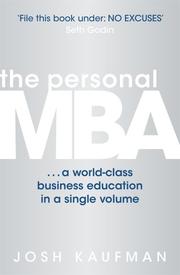 The personal MBAJosh Kaufman · 2010
 Mechanics todayS. Nemat-Nasser · 1974
 Foundational Papers in Complexity ScienceDavid Krakauer · 2024
- 📕How to be a quantitative ecologistJason Matthiopoulos · 2011
 Engineering Modelling and AnalysisDavid Walker, Michael Leonard · 2009
 MathleticsJohn D. Barrow · 2012
 Scaling biodiversityBrown, James H. · 2007
 Practical Electronics for InventorsPaul Scherz · 2000
Ranked by number of editions on Open Library, a rough measure of how lasting a book is.
🔗 Related topics
- Monte Carlo method in statistical mechanics Monte Carlo in statistical physics refers to the application of the Monte Carlo method to problems in statistical physics, or statistical mechanics. The…
- Gumbel distribution In probability theory and statistics, the Gumbel distribution (also known as the type-I generalized extreme value distribution) is used to model the distributio…
- Kramers–Wannier duality The Kramers–Wannier duality is a symmetry in statistical physics. It relates the free energy of a two-dimensional square-lattice Ising model at a low temperatur…
- Network entropy In network science, the network entropy is a disorder measure derived from information theory to describe the level of randomness and the amount of information…
- Rayleigh distribution In probability theory and statistics, the Rayleigh distribution is a continuous probability distribution for nonnegative-valued random variables. Up to…
- Tracy–Widom distribution The Tracy–Widom distribution is a probability distribution from random matrix theory introduced by Craig Tracy and Harold Widom (1993, 1994). It is the…
- Unit Weibull distribution The unit-Weibull distribution (UW) is a continuous probability distribution with domain on ( 0 , 1 ) {\displaystyle (0,1)} . Useful for indices and rates…
- Variance function In statistics, the variance function is a smooth function that depicts the variance of a random quantity as a function of its mean. The variance function…