Everything about Random assignment
Process for allocating experimental subjects to groups
Random assignment or random placement is an experimental technique for assigning human participants or animal subjects to different groups in an experiment using randomization, such as by a chance procedure or a random number generator. This ensures that each participant or subject has an equal chance of being placed in any group. Random assignment of participants helps to ensure that any differences between and within the groups are not systematic at the outset of the experiment. Thus, any differences between groups recorded at the end of the experiment can be more confidently attributed to the experimental procedures or treatment. Wikipedia →
🧭 Start here: a 6-step reading path
- Read the overview: Random assignmentA 5-minute orientation
- Skim a recent paper: Stochastic stability analysis of particle swarm optimization with pseudo random number assignment strategyInfluential work since 2022
- Pick up a classic book: The BASIC cookbookThe most-reprinted book on the subject
- Read the landmark paper: Countable nondeterminism and random assignmentCited 130 times
- Go sideways: Randomized experimentA closely related topic
- Go sideways: Statistical theoryA closely related topic
📖 Definitions
No dictionary entry for this exact phrase.
🗂️ The subject at a glance
🏆 Landmark papers (most cited)
Countable nondeterminism and random assignment
Asymptotics in the random assignment problem
Random assignment of multiple indivisible objects
The Random Assignment of Students Into Elementary Classrooms
Random assignment problems
Three Methods of Random Assignment
Random assignment: Redefining the serial rule
Academic Peer Effects with Different Group Assignment Policies: Residential Tracking versus Random Assignment
🆕 Influential since 2022
Stochastic stability analysis of particle swarm optimization with pseudo random number assignment strategy
Testing random assignment to peer groups
What Does a Provider Network Do? Evidence from Random Assignment in Medicaid Managed Care
Random Assignment with Nonrandom Peers: A Structural Approach to Counterfactual Treatment Assessment
What Difference Does a Health Plan Make? Evidence from Random Plan Assignment in Medicaid
📚 Books worth reading
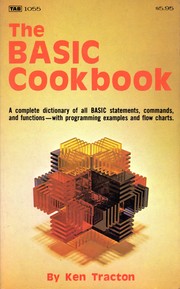 The BASIC cookbookKen Tracton · 1978
Ranked by number of editions on Open Library, a rough measure of how lasting a book is.
🔗 Related topics
- Randomized experiment In science, randomized experiments are the experiments that allow the greatest reliability and validity of statistical estimates of treatment effects.…
- Statistical theory The theory of statistics provides a basis for the whole range of techniques, in both study design and data analysis, that are used within applications…
- Design of experiments The design of experiments (DOE), also known as experimental design, refers to the construction of procedures that attempt to explain how changes in one…
- Oscar Kempthorne Oscar Kempthorne (January 31, 1919 – November 15, 2000) was a British statistician and geneticist known for his research on randomization-analysis and…
- Treatment and control groups In the design of experiments, hypotheses are applied to experimental units in a treatment group. In comparative experiments, members of a control group…
- Analysis of variance Analysis of variance (ANOVA) is a family of statistical methods used to compare the means of two or more groups by analyzing variance. Specifically, ANOVA…
- Experimental psychology Experimental psychology is the work done by those who apply experimental methods to psychological study and the underlying processes. Experimental psychologists…
- List of publications in statistics This is a list of publications in statistics, organized by field. Some reasons why a particular publication might be regarded as important: Topic creator…